
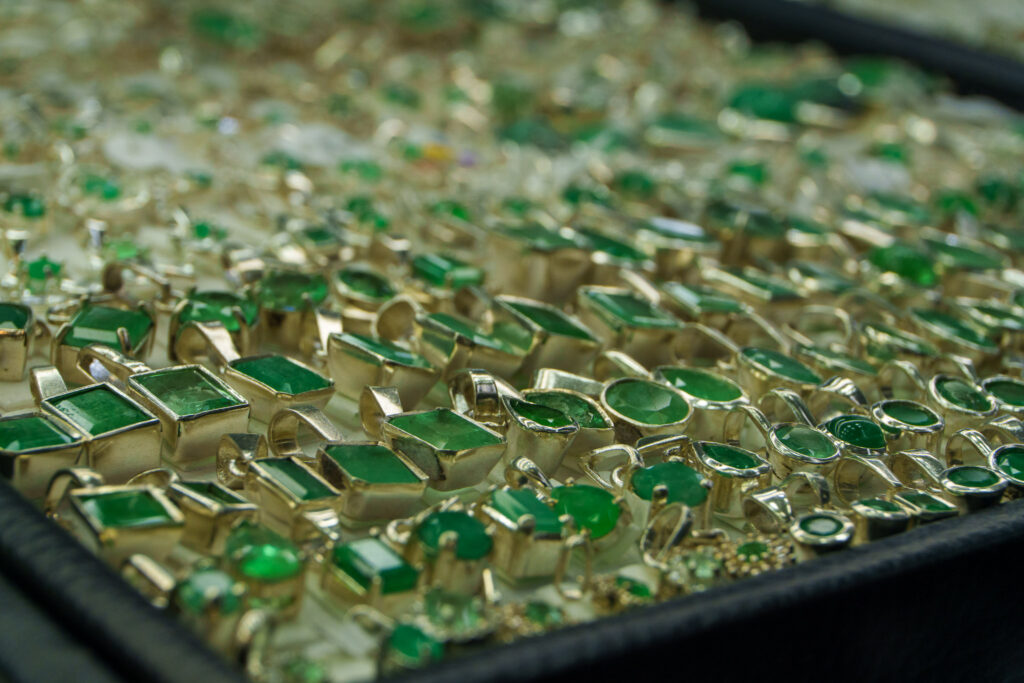
Muzo is often called the emerald capital of Colombia, and that reputation is not just marketing. For decades, the town and surrounding hills have been tied to the extraction of some of the country’s most famous emeralds. Visitors who come for the gemstones also end up learning about a regional identity built around mining, craft, and trade.
Just as important as Muzo is the idea of the “Emerald Triangle of Colombia,” a region known for producing emeralds with a consistent geological story. The term “Emerald Triangle” is used because the main production areas form a rough triangle on the map within Boyacá. If you’re planning emerald tourism, thinking in terms of the triangle helps you understand why multiple towns are connected by geology, history, and markets.
In this guide, you’ll learn what makes Colombian emeralds world-famous, how emeralds form in simple terms, and what varieties you might see in local collections. You’ll also find practical travel tips for visiting Muzo and connecting it to other key emerald locales in Boyacá.
Colombia’s emerald-producing zone is located in the department of Boyacá, in the central Andes region. Boyacá includes many highland valleys and ridges where mineral veins and sedimentary layers meet in ways that allow emerald-bearing rocks to form. The result is a landscape where mining is not a side activity, but a long-term part of the local economy.
The “emerald triangle” is a practical label for the belt of emerald activity across several communities. While maps and exact boundaries can vary depending on the source, travelers usually connect the best-known production areas through shared road access and shared trading networks. This is why your itinerary can feel coherent even when you’re hopping between different towns.
Within the Emerald Triangle, three names come up again and again: Muzo, Coscuez, and Chivor. Together, they represent the core of Colombia’s most celebrated emerald history and a large portion of the stones seen in regional markets and international jewelry. Each area has its own mining heritage and gem characteristics that collectors look for.
Muzo is the most iconic name for many travelers, partly because of its long-running mining culture and the high reputation of emeralds associated with the area. Coscuez is also widely mentioned in gem circles, with stones known for strong color and distinctive appearances. Chivor adds another chapter to the story and is often included because it has long been part of the region’s emerald economy.
For a visitor, the key point is not to treat these as three separate “brands,” but as communities formed by the same larger emerald belt. A tour route that includes all three usually gives you a fuller view of how local miners, traders, and jewelers interact across Boyacá.
Colombian emeralds are famous because they combine vivid green color with a kind of clarity and brilliance that many gem buyers seek. In gem terms, “emerald” is a specific mineral species (beryl) and not a vague label for any green stone. The quality differences come from the exact chemistry and formation conditions in the rocks where the beryl grows.
Collectors and jewelers often value Colombian stones because they can show a deep, saturated green that may be paired with good transparency. In many cases, Colombian emeralds are also known for the way light moves through the stone, which helps them look “alive” in jewelry. Even when a stone has inclusions (internal features), skilled cutting and careful selection can still produce strong visual results.
It helps to separate “color” from “clarity” in your mental model. Emeralds commonly include natural features, and the gem trade evaluates how these features affect appearance, strength, and beauty. In other words, a great Colombian emerald is not only about being “clean”; it’s about being attractive in real viewing conditions.
Emeralds form when beryl crystallizes under specific temperature and chemical conditions. In the emerald-bearing rocks of Boyacá, fluids rich in the right elements move through fractures and host rocks over long geological time. These fluids allow beryl to grow into emerald, with chromium and vanadium often playing a key role in the green color.
The local geology matters because it creates the right environment for emerald growth and because it preserves stones in mineral veins. Boyacá has layers and structures that act like a “path” for mineralizing fluids, allowing emerald crystals to develop rather than being washed away or diluted. This is why the Emerald Triangle can produce gems that share recognizable geological traits.
Emerald geology is also important for understanding what you will see in the marketplace. Natural growth can produce stones that vary from mine to mine, and even within the same mine. That variability is normal and is part of why trained buyers and gemologists pay attention to origin and quality.
During shopping, you may hear “trapiche” and other variety names. “Trapiche” refers to emeralds that show a wheel-like pattern, often with dark or light growth structures that radiate from the center. The word is associated with sugar mills (“trapiche” in Spanish), and the pattern resembles a mill wheel when viewed from above.
Another common term you may encounter is “emerald with inclusions” or “natural features,” since inclusions are very common in emeralds. Instead of thinking of inclusions as only flaws, gemologists consider them part of natural identity and use them to assess origin and treatment risk. Cut quality also changes how inclusions show, which is why the same rough material can look very different after cutting.
You may also see different descriptions connected to color zoning and texture. “Zoning” means that the stone’s color is not uniform in all areas, which can happen naturally during crystal growth. Local jewelers may use practical terms to describe these looks, so it helps to ask whether the description refers to color, transparency, or pattern.
Mining in Muzo became a cornerstone of regional life because emeralds turned local geology into global commerce. Long before modern tourism, the stones supported networks of traders and cutters who moved emeralds from Boyacá to major markets. Over time, Muzo became a symbol of Colombia’s emerald identity.
As mining activity grew, it also shaped local culture. Many families became involved in mining-related work, and knowledge about stones passed down through practice and observation. Even today, the “emerald economy” influences what visitors see, from tools and workshops to storefront inventories.
The development of emerald mining in Muzo unfolded in stages, moving from small-scale extraction to more organized and regulated operations. Early discoveries brought attention and migration, while later periods introduced stronger rules and more formal inspection requirements. These changes affected how stones were handled, sold, and verified.
In more recent decades, modern mining has also had to balance production with environmental and safety expectations. The emerald world became more sensitive to responsible sourcing, and governments and industry partners increased oversight. Without going into deep technical legal detail, the overall trend is clear: mining practices evolved to reduce uncontrolled risk and improve traceability.
For travelers, the historical takeaway is simple: the emerald story in Muzo is long, and the town built systems around emerald value. That’s why a visit feels more like stepping into a working gemstone region than seeing an abandoned attraction.
Your best experiences in Muzo connect three things: emerald heritage, local craftsmanship, and safe, educational contact with the gemstone trade. Even if you don’t buy a stone, you can still learn how quality is judged and how emeralds are presented to buyers. That knowledge will help you shop wisely anywhere, not only in Boyacá.
Many visitors focus on short experiences because travel time in the Andes can be demanding. A well-planned visit usually mixes a market visit with at least one guided explanation. This approach helps you avoid treating emeralds as a mystery you only “see,” rather than something you learn to evaluate.
Depending on your interests and available time, consider experiences like these:
Not all tours are equal, and emerald mining areas require careful planning for both safety and legality. A responsible tour should be transparent about where you are allowed to go and what you are allowed to see. It should also emphasize that mining sites are active workplaces, not open attractions.
When you look for legitimate guidance, prioritize operators that provide clear communication and respect for local rules. This typically means they coordinate with community contacts and explain any protective equipment expectations. If a tour sounds vague or encourages you to enter restricted areas, treat that as a red flag.
For your safety and learning quality, look for tours that offer an educational structure. Good tours often include time to discuss emerald geology at a basic level, along with time in markets or workshops where stones are evaluated. That combination helps you connect “how emeralds form” with “how emeralds are sold.”
Local markets in the emerald region can be exciting because you may see stones in many sizes and price levels. The challenge is that emeralds are complex, and not every description you hear is equal in quality or honesty. Your job as a visitor is to slow down and evaluate based on repeatable criteria.
When you’re shopping, focus on understanding the stone as a gem, not only as a color. Ask how the stone was cut, what features it has, and whether there is documentation from the seller. Good jewelers can explain their choices and will not rely only on the word “premium.”
A practical checklist to reduce mistakes includes:
Be cautious about overly dramatic claims and extremely low prices that conflict with market reality. Emerald pricing depends on multiple factors at once, including color, size, appearance, and treatment history. If a seller cannot explain the price in a reasonable way, walk away and compare elsewhere.
One of the best ways to experience Colombia’s emerald capital is to connect it with other core communities in the Emerald Triangle. Traveling between towns is not only about seeing more shops, but also about seeing how emerald culture changes from place to place. Even when stones come from the same broader belt, local networks and preferences can differ.
If you want a smooth route, choose a base and build day trips. This can reduce fatigue and give you time for market visits without rushing. Many first-time visitors prefer a simple multi-town plan rather than trying to cover every possible stop.
Muzo is a natural base if your priority is the most famous name in the region. Many travelers then add Coscuez and Chivor either through direct visits or via guided day routes organized by local partners. The exact order often depends on road conditions, tour availability, and your time constraints.
Here are two common itinerary patterns that match how most visitors pace emerald travel in Boyacá:
When you plan, remember that “tour time” is not the same as “learning time.” You want enough time to compare stones, ask questions, and absorb explanations. If you try to compress too much into one day, you may end up tired and less able to evaluate quality carefully.
Finally, ask your guide or operator about realistic travel times and any local access limitations. The emerald region has terrain that can affect movement, so a small change in schedule can make your trip smoother and safer.
Planning well is part of enjoying emerald tourism, especially in mountainous areas where routes can shift. Start by arranging key elements early: accommodation, transport, and guided experiences. This reduces the chance that you’ll waste half-days trying to find help on short notice.
Transportation usually depends on where you’re coming from and whether you choose guided routes. Many travelers use a mix of car travel and local coordination because the sites and markets are spread across valleys. If you prefer a more independent style, confirm where vehicles can stop and where walking is required.
For safety and comfort, keep practical expectations. Mining culture can be close to daily life, and markets can be busy, so keep your belongings secure and use common-sense vigilance. If you’re visiting active or historic mining areas, always follow instructions from your local contact.
The emerald region in Boyacá is affected by Andean climate patterns, which can include rainy periods and changing visibility. Weather can influence road conditions and the ease of travel between towns. Even if the trip is short, check forecasts and be ready for clouds or rain that can reduce daylight and slow movement.
If you want the most comfortable touring experience, prioritize days with stable conditions and plan market visits for morning when lighting is consistent. Rain can also make ground conditions slippery near informal access points, so a guide becomes even more valuable. Flexible scheduling helps you avoid feeling forced to rush in poor conditions.
Because emerald tourism often includes walking through workshops, showrooms, or market streets, pack for both warm and cool moments. Highlands can cool down quickly in the evening, and your comfort directly affects how much you enjoy browsing and learning.
Costs in the emerald region vary based on tour type, transport needs, and how many guided stops are included. A guided educational visit may cost more than a self-guided market stroll, but it often saves time and improves learning quality. When discussing pricing, ask what is included, such as transportation, entry coordination, or a gemology-focused explanation.
Permits and access rules can apply to certain sites, especially if mining operations are active. Even where public access exists, there may be restrictions on where visitors can stand or what they can photograph. Respect these limitations to avoid unsafe or illegal entry.
It also helps to understand that emerald purchases are not “simple retail.” Sellers may offer stones with different documentation levels, and pricing can depend on details that are not obvious at first glance. If you’re unsure, budget time for questions and comparison rather than rushing into a decision.
Emerald sustainability is about more than the environment, though that matters too. Ethical jewelry considerations focus on transparency in sourcing, respect for worker safety, and responsible handling of gemstone value. For travelers, the goal is to buy in a way that supports legitimate supply chains rather than fueling unsafe or unclear practices.
Responsible sourcing often involves documentation that helps connect a stone to a credible origin narrative. While every purchase situation is different, asking for information about origin, treatment, and quality standards improves accountability. This also helps protect you from misunderstandings about what you’re buying.
Sustainability also includes how jewelry decisions affect long-term value. Stones chosen carefully and presented honestly tend to become heirlooms rather than impulse purchases. If you buy with education in mind, you’re more likely to be satisfied for years.
Buying emeralds confidently comes from asking clear questions and expecting clear answers. You don’t need to be a gemologist to do this, but you do need to ask for the right details. The following checklist is designed for typical visitor conversations in jewelers’ shops and during tours.
If a seller cannot answer basic questions or uses only vague language, treat that as a prompt to compare elsewhere. Ethical selling does not mean every answer is perfect, but it should be consistent and explainable. You deserve clarity when you’re spending money on something that represents both geology and craftsmanship.
Muzo’s “emerald capital” label is earned through history, geography, and a living gemstone culture that shaped how Colombia became famous for emeralds. The Emerald Triangle concept helps you see the bigger picture: multiple communities connected by the same emerald-bearing geology. When you visit with the right expectations, you understand that emerald tourism is both educational and cultural.
Use your trip to learn how emeralds form, what common types like trapiche mean, and how quality is evaluated beyond just color. Then connect Muzo to Coscuez and Chivor to experience a broader slice of Boyacá’s emerald heritage. With guided, responsible visits and careful shopping questions, you’ll leave with knowledge you can use anywhere in the gemstone world.
Your next step after reading this should be planning your route and choosing experiences that prioritize safety, transparency, and learning. Whether you buy a stone or only collect knowledge, a well-structured Emerald Triangle trip can turn curiosity into real gem understanding—one emerald detail at a time.