
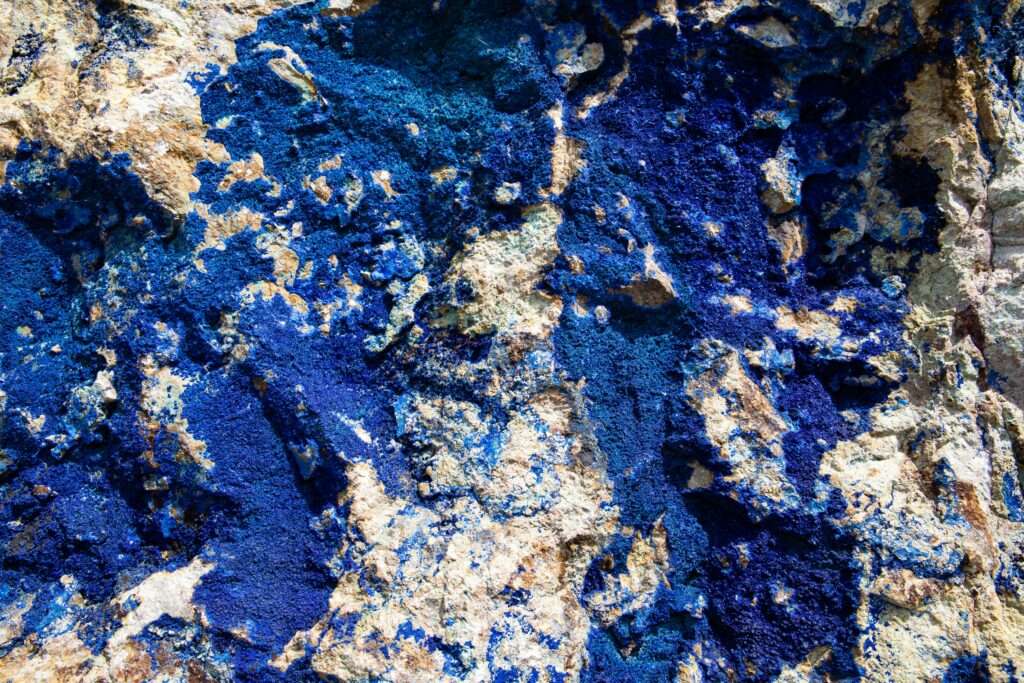
Lapis lazuli from Chile refers to lapis lazuli mined in Chile and recognized in the market for its color, availability, and role in modern gemstone and pigment supply chains. While lapis lazuli is found in several countries, “Chilean lapis lazuli” is often used as a sourcing label that helps buyers track origin and compare material.
Chile’s contribution matters because lapis lazuli is demanded not only as a gemstone but also as a source of deep blue pigment, historically linked to ultramarine-style paints. In this guide, you’ll learn what lapis lazuli is, where Chilean material comes from, how quality is graded, and how people use it today.
Lapis lazuli is a rock, not a single mineral. Most of its value comes from a mineral called lazurite, which is responsible for the stone’s deep blue color.
Even though lazurite sets the “blue” identity, lapis lazuli usually contains other minerals as well. Those additional minerals affect color tone, sparkly flecks, hardness, and the visible pattern that helps gemologists and buyers judge quality.
Lazurite is the key blue mineral in lapis lazuli, and it forms in specific geological conditions, often linked to metamorphism (heat and pressure changes in rocks). When lazurite is abundant and well distributed, the stone looks more intensely blue.
Calcite is a common companion mineral and can appear as pale white or cream veins and grains. In lapis lazuli, calcite often shows as light streaks that may reduce the overall “pure” blue look, depending on how much and how clearly it appears.
Pyrite is another well-known mineral in lapis lazuli, recognizable as small metallic golden flecks. Those flecks are sometimes called “sparkle” and can be desirable when they are evenly distributed and not overwhelming.
Because lapis lazuli is a mixed rock, its physical properties can vary from piece to piece. That’s why gemologists often grade by appearance and intended use, rather than expecting every stone from the same origin to look identical.
Quality grading for lapis lazuli usually starts with color tone and saturation. The most sought-after material is typically a strong, medium-to-deep blue that looks vibrant rather than dull or gray.
Next, buyers look at visual markers, especially the balance of blue background, white calcite, and golden pyrite flecks. A “busy” surface with large calcite patches may be less valued for fine jewelry, while smaller, well-spaced flecks can be attractive.
Uniformity is another grading factor, particularly for cabochons and beads where the stone’s pattern should “read” well under lighting. Rough material that shows strong, cloudy streaks of calcite or inconsistent blue can still be used, but it may fit lower grades or different products.
Market preferences can change by region and customer type. Some buyers want dramatic contrast between blue and white; others focus on “clean” blue with minimal calcite veining.
Chilean lapis lazuli is mined from natural deposits where the rock-forming conditions allowed lazurite to develop. At a high level, lapis lazuli occurs in carbonate-rich rocks that underwent geological transformation under heat and pressure.
Because lapis lazuli is tied to a specific geological environment, only certain areas are promising for discovery. For Chilean material, origin matters because it shapes the typical look of the stone, including how the blue is distributed and how calcite and pyrite show up.
Lapis lazuli typically forms when sulfur-rich fluids interact with carbonate rocks, while metamorphic processes help build the mineral assemblage. The combination of available elements—especially sulfur—and the right pressure-temperature history allows lazurite to crystallize.
In many lapis-lazuli-bearing regions, the host rocks are part of a broader structural and metamorphic setting. In simpler terms, rocks were “reworked” by Earth’s forces so that the chemistry and crystal growth conditions changed into a lapis lazuli environment.
Chile’s geology includes belts and terranes with the right kinds of rock sequences and metamorphic histories. That’s why Chilean mines can produce lapis lazuli, even though the deposits may be limited compared to other countries.
Once rough is extracted, lapis lazuli typically goes through several steps before it becomes a gemstone or a decorative object. These steps include sorting, cutting planning, and polishing tests based on how the stone’s pattern will appear in the final form.
Rough pieces are commonly evaluated for expected yield, meaning how many saleable finished items can be made from each chunk. Stones with strong, attractive blue areas may be reserved for higher-end cabochons, beads, or carved pieces.
From there, material is usually processed through commercial networks that can include wholesalers, cutters, polishers, and exporters. Buyers should note that the “origin label” may reflect the mine or region of extraction, but finished goods can pass through multiple hands before reaching retail.
Understanding this pathway is useful because it explains why two pieces labeled “Chilean lapis lazuli” can still look different. Sorting and cutting choices strongly influence the final appearance.
Lapis lazuli has been traded and valued for centuries because of its striking blue color and cultural symbolism. It became famous across many regions through long-distance trade, where rarity and beauty were both important.
Chile’s role is part of a longer story that includes historic demand for blue pigments and fine decorative goods. Today, Chilean material is also used in modern jewelry and design, where consumers often want both color and documented sourcing.
Lapis lazuli was historically prized in the ancient world for luxury status and its association with royalty. Its blue color was hard to replicate in many everyday materials, which increased its value.
Across ancient trade routes, lapis lazuli traveled from mining regions to cities where craftsmen used it for seals, ornaments, and inlays. Demand created a market that rewarded vivid blue over pale or patchy material.
Because lapis lazuli is a rock with natural variation, the best-looking pieces often became especially collectible. Origin became part of the story even when names were less precise than they are today.
One major reason lapis lazuli remained famous is the pigment that can be made from it. Historically, grinding and processing lapis lazuli produced a deep blue color associated with ultramarine pigments, which were prized by painters.
Ultramarine pigment is known for its intense blue and long tradition in fine art. The connection between lapis lazuli and ultramarine made the stone important beyond jewelry, influencing how it was sourced and processed.
While modern pigment chemistry can use multiple sources, the historical “ultramarine lapis” link is still part of the cultural meaning of the stone. That heritage is one reason lapis lazuli continues to be discussed in both mineral and art contexts.
In modern markets, origin information is more visible, and consumers often ask where colored stones come from. Chilean lapis lazuli may be presented as a specific sourcing choice, especially for retail brands that highlight natural color and supply chain transparency.
At the same time, the gemstone and decorative stone trades are global. A finished piece may combine techniques from different regions, while still using rough extracted from Chile.
As buyers learn more about mineral composition and quality grading, they also pay attention to how different origins tend to look. This can affect demand because certain customers prefer the pattern and color balance they associate with Chilean material.
Lapis lazuli’s uses have long included both practical and decorative roles. Historically, it was valued for the blue it could provide, as well as for its beauty when polished or carved.
Traditional applications often highlight the stone’s natural visual features, such as golden pyrite sparkle and the interplay of blue with white calcite. Even when calcite reduces “uniform blue,” it can create a distinctive pattern that craftsmen embrace.
Artists and workshops used lapis lazuli-derived pigment to achieve a strong blue tone. Ultramarine pigments were often associated with high-quality painting and labor-intensive preparation.
In simpler terms, the stone’s ability to produce deep blue color made it valuable for visual arts. Its demand supported specialized trading and processing methods that refined the pigment from natural material.
Even today, the “ultramarine story” influences how people think about lapis lazuli as more than a gemstone. That is why lapis lazuli appears in discussions about pigments, conservation, and traditional art materials.
Beyond pigments, lapis lazuli has been used for ornaments such as beads, cabochons, and small carved figures. Craftspeople often selected pieces for their strong color and visual harmony.
Inlay work is another classic use, where lapis lazuli is set into metal, wood, or other stone to create blue patterns. In these designs, contrast is part of the beauty, so white calcite veining and gold flecks can enhance the final look.
Lapis lazuli’s symbolism also contributed to its popularity. Many cultures associated deep blue with spiritual power, status, or protection, and this helped create lasting demand for decorative objects.
Today, lapis lazuli from Chile is used across several product categories. The most visible are jewelry and decorative stonework, but it also appears in collectibles and interior design accents.
Modern cutters aim to maximize color and minimize distracting features for each intended style. That means grading and selection are often done with the final product in mind.
Cabochons are one of the most common lapis lazuli cuts because the material’s natural rock character is visually attractive when polished smoothly. A dome-shaped cabochon can highlight the “blue field” and the distribution of pyrite flecks.
Beads are made by drilling and polishing, which requires careful planning to avoid weak zones or large white calcite patches. The best bead material often has a pleasing blue background across the drilled area.
For rough stones with strong calcite veining, cutters may choose designs that incorporate the pattern rather than fighting it. This approach can improve the final appearance and yield better value per rough piece.
Lapis lazuli jewelry remains popular because its blue can be both bold and easy to style. It pairs well with warm metals like gold-toned settings, but it can also look striking in silver-toned designs.
Common jewelry forms include pendants, earrings, rings, and bracelets using cabochons or bead strands. The design often aims to show the stone’s natural sparkle without covering too much of the surface.
Many customers also like lapis lazuli for its historical associations and its “earthy luxury” look. That cultural background supports consistent demand, even as fashion changes over time.
Not all lapis lazuli is cut for high-end jewelry. Many pieces are used in décor, including small carvings, polished spheres, and display accents.
Collectors may look for stones with distinctive patterns or particularly attractive flecking. Even when a piece is not “gem-grade,” it can still be valuable for its visual character and craftsmanship.
Interior décor uses often focus on polish, color richness, and the way the stone reflects light. That makes surface finish and slab selection important for decorative applications.
Choosing lapis lazuli involves both education and careful buying practices. Because it’s a rock with variable minerals, “quality” is not only about color—it’s also about pattern, consistency, and how the stone was handled.
Whether you’re buying lapis lazuli from Chile or another origin, you should look for clear visual cues and ask the seller the right questions. This reduces the risk of disappointment and helps you match the stone to your intended use.
Start with the color you can see in normal lighting and compare it to your expectations. A rich blue that looks vibrant in daylight is usually more satisfying than a blue that looks gray or washed out.
Next, check the flecks and pattern. Pyrite “sparkle” should appear naturally and be distributed in a way that complements the shape, especially for cabochons and beads.
Finally, evaluate the surface finish and signs of uneven polishing or scratches. Smooth polish is essential because lapis lazuli is often judged by how light travels across its surface.
If possible, view the stone from multiple angles. Lapis lazuli can look different under bright shop lighting versus softer daylight, and that affects how you interpret color.
One of the most important buying topics is whether the stone has been treated. Treatments are used to improve appearance such as color uniformity or surface clarity, but they can also affect long-term behavior.
Imitations and dyed materials exist in the market because lapis lazuli’s blue is distinctive and profitable. Some products may use other blue stones or composite materials designed to resemble lapis lazuli.
To buy confidently, ask questions and request documentation when appropriate. A careful seller can often explain the stone’s general grade, any treatment known, and how it was sourced.
Note that not every enhanced stone is “bad,” but transparency matters. If treatment is present, you should understand what it changes and how to care for the piece.
Lapis lazuli is relatively durable for jewelry use, but it still needs gentle care. Its hardness comes from its minerals, yet the rock texture means it can be sensitive to impact and harsh chemicals.
Good maintenance helps preserve the stone’s shine and reduces wear on the surface polish. Since lapis lazuli’s beauty is surface-based, scratches and dullness can noticeably affect how it looks.
For cleaning, use mild methods and avoid strong solvents. A simple approach is to wipe the stone with a soft, damp cloth, then dry it with a clean microfiber cloth.
Avoid ultrasonic cleaners and steam cleaning unless the seller confirms they’re safe for your specific piece. Because lapis lazuli can include calcite and other minerals, aggressive cleaning can increase the risk of surface damage.
If your lapis lazuli piece has settings, take care not to trap water or cleaning residue in gaps. For best results, keep the cleaning brief and dry the stone thoroughly afterward.
Storage matters because lapis lazuli can scratch if it rubs against harder materials. Store pieces separately, ideally in a pouch or a lined compartment with no direct contact between stones.
Keep lapis lazuli away from long exposure to extreme heat or direct sunlight for extended periods. Prolonged heat can stress certain finishes or treatments, and lighting changes can affect how color appears over time.
Also protect finished pieces from knocks. Even if the stone is not fragile like glass, impact can chip edges, especially on thin cabochons or carved ornaments.
Colored stone supply chains can be complex, and consumers increasingly want transparency. Sustainability in lapis lazuli relates to mining practices, labor conditions, environmental impacts, and accurate product labeling.
Because lapis lazuli is often traded through multiple steps, ethical sourcing depends on cooperation across the supply chain. Buyers can reduce risk by choosing sellers that provide clear origin claims and responsible business practices.
Ethical sourcing doesn’t have one single definition, but it usually includes traceability and respect for workers and local environments. In practice, that means clear documentation and realistic reporting about how stones are mined and handled.
When a seller can explain where the stone came from and how it was handled, it becomes easier to assess trust. Look for consistency between origin claims, product photos, and any treatment disclosure.
In simple terms, ethical sourcing is about making sure people know what they’re buying and where it came from. That includes acknowledging uncertainty when verification is not possible.
One practical way to support responsible sourcing is to buy from jewelers or suppliers that communicate openly. Sellers who answer questions clearly and consistently tend to treat transparency as part of their service.
Ask whether the seller can provide details about origin and treatment, even if they cannot provide a full lab report for every item. If they refuse to answer basic questions, it may be a sign to look elsewhere.
You can also support responsible brands by choosing products that prioritize quality and honesty. Better quality reduces the chance you’ll need replacements soon, which indirectly supports more sustainable purchasing habits.
These questions cover common concerns people have when searching for lapis lazuli, especially when an origin like Chile is mentioned. Use the answers to guide buying decisions and to better understand what you’re seeing.
Chilean lapis lazuli is still lapis lazuli, meaning it contains lazurite as the main blue color mineral and usually includes calcite and pyrite. What differs by country is the geological deposit, which can influence typical color distribution and how much white veining or pyrite sparkle appears.
So, it’s the same “type” of material by definition, but not the same exact look in every piece. Origin affects story and often appearance patterns, while the broader term “lapis lazuli” still applies.
Higher-grade lapis lazuli with vivid blue and attractive, controlled flecking is often used for fine jewelry such as cabochons, pendants, and high-end bead work. Stones with more calcite veining or uneven blue may be better suited for carvings, inlays, or decorative objects where pattern becomes part of the design.
For pigment-related interests, material quality may be discussed differently than in gemstone grading. In general terms, pigment value depends on processing outcomes and the ability to produce a consistent blue tone.
If you’re shopping on the spot, start by comparing several pieces in the same lighting conditions. Look for consistent deep blue tone, clean polish, and a pleasing balance between blue background, white calcite, and pyrite flecks.
Then ask direct questions about origin and treatment. If the seller can’t explain whether the stone is natural and untreated (or what enhancements were used), you should treat the purchase risk as higher.
Finally, inspect the piece closely for chips and scratches, especially at edges and drilled holes. A visually good stone can still be a poor buy if it’s already damaged from handling.