
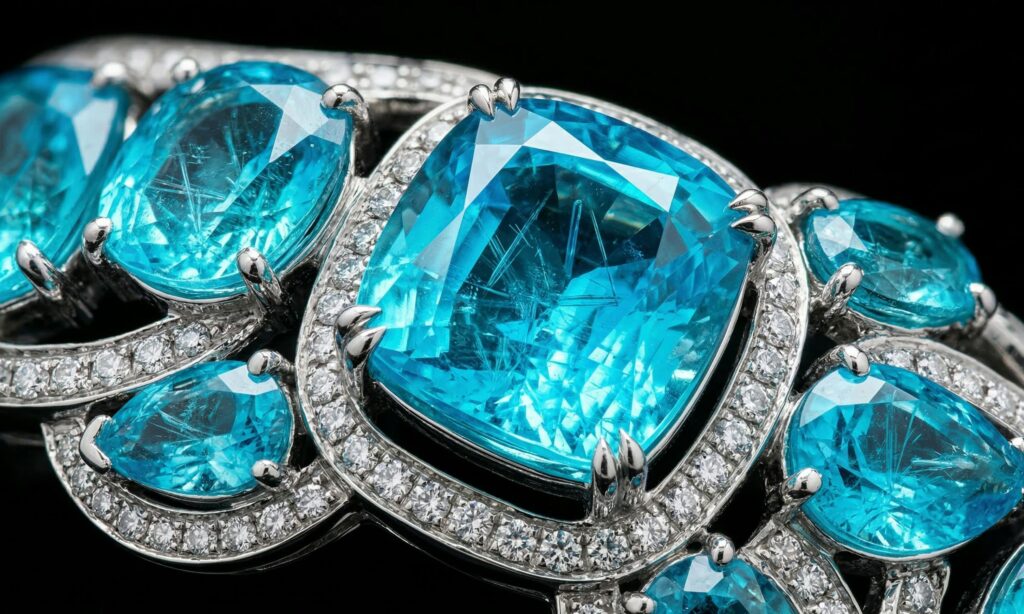
Paraíba tourmaline is prized because of its intense “electric” blue to blue-green to green color. In gemology, that kind of vivid color is harder to find than people expect, even when gemstones look similar at first glance. The rarity comes from where it forms, which elements are involved, and how much high-quality rough reaches the market.
Paraíba tourmaline is associated with specific copper-bearing conditions during crystal growth. The chemistry matters, but the color you see also depends on how uniformly that chemistry is distributed through the crystal. Two stones can be from the same general source and still look different if the crystal growth conditions varied.
The name “Paraíba” comes from the Brazilian state of Paraíba, where copper-bearing tourmalines were first identified as producing the famous neon colors. These early discoveries drove global attention, because the most saturated “neon” colors were not commonly seen in other tourmaline sources.
Later, additional finds were reported in other regions, including Mozambique and Nigeria. These locations can also produce copper-bearing tourmalines, but the amount and consistency of gem-quality material often differ. Availability depends on mining output, market timing, and whether rough can be cut into stones that retain strong color.
Demand is strongly tied to color intensity and “neon” brightness. “Neon” in this context means the color appears vivid and glowing, not muted or cloudy, even under normal lighting.
Buyers often separate Paraíba tourmaline into two broad visual groups:
Both can be highly valuable, but preferences vary by market. When buyers chase the most saturated stones in a narrow hue range, prices can rise quickly, and that can make “top color” material especially scarce.
Natural rarity means the number of stones with the right combination of color, clarity, and cutting potential is limited from the start. Even when rough is available, it may not contain enough of the right chemical conditions in the right places to produce bright, evenly colored finished gems.
Market availability can still fluctuate year to year. A dealer might see many mid-grade stones one season and very few fine examples the next season, depending on what rough was mined and what was already cut and sold elsewhere.
Paraíba tourmaline price is not set by one factor. It reflects a combination of gem quality (color, clarity, cut) and the marketplace’s view of rarity at that moment.
When comparing prices, focus on consistent details and avoid comparing stones that differ in several major ways at once. A lower price can reflect weaker color saturation, less attractive hue, a windowed cut (a stone that looks dark from certain angles), or heavier inclusions.
Color is the main driver of Paraíba tourmaline value. “Hue” means the basic color family (blue, blue-green, green), while “saturation” describes how strong and pure that color looks. A stone with high saturation can appear more “electric,” which is why the best material often commands a premium.
A practical framework for evaluation is to compare three elements together:
Under many lighting conditions, the most valued Paraíba stones stay vibrant rather than fading into a grayish or overly dark look. A seller should be able to discuss how the stone appears in natural light or standard display lighting.
Clarity matters, but it should be treated with realistic expectations. Many Paraíba tourmalines contain inclusions, especially because the crystals formed under complex geological conditions and were cut from naturally imperfect rough.
Inclusions can affect value in two main ways: they can reduce transparency (making the stone look “watery” or hazy), and they can create visual distractions. However, a stone may still be very desirable if its color is strong enough that small internal features don’t ruin the overall look.
When you evaluate clarity, consider how inclusions interact with color. A darker stone with obvious internal features will usually look less impressive than a bright stone with similar internal characteristics.
Cut quality strongly influences how color performs to the eye. A well-cut tourmaline brings out color by managing light return (sparkle) and light transmission (how the gem “glows” from within).
Look for signs of good proportions and clean finishing. If the stone is cut too shallow, it may show weaker depth; if too deep, it may look dark because light travels too far before returning to your eyes.
Also note that tourmaline color can look different when viewed face-up versus at slight angles. Good cutting preserves the strongest color zone so it remains visible during normal wear.
Carat weight affects price because larger stones are rarer, especially in a specific color grade. However, size alone does not guarantee value; a larger stone with weak color can be less attractive than a smaller, top-color gem.
For many first-time buyers, it helps to think in tradeoffs: you are often choosing between higher color saturation in a smaller size versus bigger size with slightly less “electric” brightness. The best choice depends on your goal—wear, budget, or collecting.
Origin labeling can impact pricing because buyers connect origin to typical color style and market history. While Mozambique and other regions can produce excellent material, some consumers prefer Brazilian stones for historical reasons and brand recognition.
That said, you should not treat origin as a substitute for quality. The only reliable approach is to evaluate color and documentation, then consider origin as one factor among several.
Treatments and enhancement can also affect value. If a stone’s treatment history is unclear, your risk increases; for that reason, reputable sellers provide clear documentation and do not rely on vague “natural” claims.
Buying authentic Paraíba tourmaline is mostly about reducing uncertainty. Because many gemstones can be described in similar language, you need verification tools like certification, clear grading, and consistent photos taken in proper lighting.
Authenticity does not only mean “is it tourmaline?” It also means “is it Paraíba-type copper-bearing material with the color characteristics buyers expect?” The best purchases combine a credible lab report with seller transparency.
Certification is a written report issued after a lab examines a stone. The report is not a guarantee of beauty, but it helps confirm identity and provides a structured description that you can compare to other listings.
When reading a Paraíba tourmaline report, look for details such as:
Different labs use different wording, and not all labs offer the same services. A credible report will be specific rather than generic, and it will match the stone you are viewing.
Also check whether the report is for the exact stone you are buying (for example, by serial number or unique identification). “Similar-looking” reports are not enough when you are paying a premium.
Before you buy, ask questions that force clarity about origin, grading, and return options. If a seller answers quickly and consistently, that is a good sign; if they avoid questions, that raises risk.
Consider asking:
A strong seller should be able to connect what the lab report says with what you see visually. If the report looks strong but the stone is dull or washed out, something is off.
Visual inspection is essential because color is what you are really buying. Use consistent lighting when possible, and compare the stone face-up to photos taken under similar conditions.
Here is a practical checklist to examine Paraíba tourmaline:
If you are buying online, ask the seller to show photos of the stone from multiple angles. Tourmaline color can change with angle, so a single photo can be misleading.
Many problems come from marketing language rather than outright forgery. However, serious scams and misrepresentation do occur, especially for gemstones that are expensive and visually distinctive.
Be cautious if you see:
Another subtle red flag is a listing that uses “neon” or “electric” as the main selling point but provides no measurable details. Great color should be accompanied by clear documentation and consistent visuals.
Choosing Paraíba tourmaline for your budget is about prioritizing what matters most. For many buyers, the “wow” factor is color, so you may need to adjust clarity or size expectations to reach your color target.
Think of value as “how much of the premium color you get per dollar.” A stone with strong neon color and only minor inclusions can feel like a better purchase than a bigger stone that is not as vibrant.
If you are new to buying Paraíba tourmaline, look for stones where color is bright and clean first, then optimize other features. You can often get strong value by selecting a saturation grade that is impressive while allowing inclusions that are not visually disruptive.
Practical “sweet spots” often include:
If you see two stones with similar lab reports, compare them in person or request comparison photos. Sometimes a slightly lower clarity grade stone looks more appealing because its color distribution is superior.
For investment-minded buying, you generally want a stone with a strong market appeal: top saturation, desirable hue, and good cut performance. Provenance and documentation also matter more when you plan to resell.
For personal wear, you might prioritize how the stone looks in real life—especially under indoor lighting. Jewelry settings can change how you perceive color, so a stone that looks slightly different in a loose setting may still be perfect on the hand or in a pendant.
Be realistic about the tradeoffs. High-end investment gems are not just “pretty,” they are also backed by consistent documentation, strong visual performance, and scarcity.
Buying loose Paraíba tourmaline lets you evaluate the stone directly and compare it objectively to other stones. You also control the setting later, which can help manage total cost.
Mounted jewelry includes additional value from craftsmanship and design. However, the setting can also hide details like color zoning or affect how light enters the gem, making evaluation harder if you do not see the stone fully.
When comparing loose stones to mounted pieces, consider:
If you buy mounted, ensure the lab report clearly corresponds to the exact stone in the setting. Ask whether the stone can be removed and whether the report still applies after any setting changes.
Proper care helps preserve the appearance and durability of Paraíba tourmaline. While tourmaline is generally durable enough for jewelry wear, it can still be damaged by rough treatment, hard impacts, and harsh cleaning methods.
Tourmaline is usually less brittle than some gemstones, but it is not indestructible. Small chips can reduce brilliance, and scratches can affect how light and color perform.
Do gentle cleaning to protect both the stone and its setting. When in doubt, follow the jeweler’s guidance and avoid aggressive methods.
Good cleaning practices include:
Avoid harsh cleaning that can harm delicate surfaces or settings. Don’t use ultrasonic cleaners or steam unless the seller or a qualified jeweler confirms they are safe for your specific stone and mounting.
Also avoid chemicals that can dull metal or damage coatings. If your jewelry has treated components or special surfaces, check compatibility before cleaning.
Store Paraíba tourmaline separately from harder stones to reduce scratch risk. Even if the tourmaline itself is durable, it can be damaged by contact with diamonds, sapphires, or other hard gems.
A simple storage routine is to use a soft pouch or a lined compartment. Keep stones away from frequent temperature swings and long-term exposure to strong sunlight if you want to minimize color change risk.
During travel, pack carefully and keep jewelry secured. A small impact during movement can chip edges, especially on stones with complex cuts.
Where you buy matters because trust and documentation directly affect your purchase risk. Paraíba tourmaline is expensive, and the margin for error is low when authenticity and grade are questioned.
You can buy from local jewelers, reputable gem dealers, gem shows, and online retailers. The best option depends on whether you can inspect the stone in person, and whether the seller provides strong policies and transparent documentation.
Reputation is built over time and reflected in business practices. Focus on transparency, clear return terms, and how the dealer communicates when you ask detailed questions.
Signals of trustworthiness include:
If a dealer refuses to provide basic details or responds only with vague statements, treat that as a warning. For Paraíba, the extra information is not optional—it is part of responsible buying.
Online listings can be convenient, but they require additional precautions because you cannot examine the stone directly. The solution is to demand documentation, photo consistency, and clear return options before purchase.
Before paying online, request or confirm:
Be cautious with listings that use dramatic lighting to make the stone appear more neon than it likely is under normal conditions. The best sellers show how the stone looks in realistic light and still maintains strong color.
A final checklist helps you avoid rushed decisions and reduces the chance of being misled. Use it as a pre-payment step so you verify the stone’s identity, quality, and terms all at once.
If any item on the checklist cannot be confirmed, either ask more questions or delay the purchase. For Paraíba tourmaline, patience usually saves money and frustration.
Start by verifying the paperwork matches the stone you are receiving. Documentation should be specific and consistent rather than general or implied.
Next, verify the gem’s quality from your buyer perspective. You do not need perfection, but you need to understand what you are paying for.
Finally, protect yourself with transaction terms. The best stones still become frustrating if the deal terms are unclear or risky.
Using this checklist can turn a confusing market into a controlled process. When authenticity, color quality, and terms are confirmed, Paraíba tourmaline becomes a purchase you can feel confident about—not just hopeful for.