
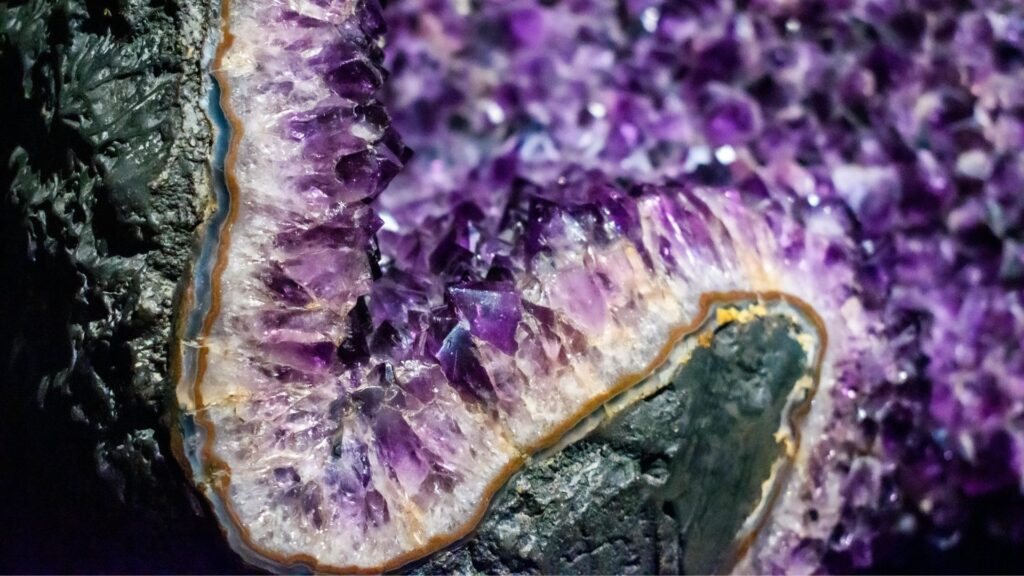
Brazilian amethyst is one of the most well-known sources of amethyst gemstones in the world. Many buyers associate it with strong purple color, workable crystal sizes, and a broad range of styles, from faceted stones to natural specimens.
In the market, the phrase “amethyst from Brazil” often means you can find stones across a wide price spectrum. That makes reputation important: not every purple stone labeled “Brazilian” is equal, so you need clear quality signals to compare options.
Typical color ranges you’ll see in Brazilian material include light lilac, medium “royal” purple, and darker tones that can approach violet-blue or deep grape. The most desirable stones usually have a balanced combination of vivid color, good transparency, and clean visual appearance.
Amethyst forms when silica-rich fluids move through rock fractures and then cool, allowing quartz to crystallize. During crystallization, iron and related trace elements and natural radiation patterns help create the purple color in quartz.
Brazil is especially important because large deposits of quartz provide both gem-grade material and attractive collectors’ specimens. The geology in different Brazilian regions affects the host rock, the crystal size, the clarity level, and the typical color distribution.
The most commonly referenced Brazilian amethyst producing areas are in the southern and southeastern parts of the country. These regions are linked to different crystal habits and common visual traits, which can help you make sense of what you’re seeing when shopping.
Because “origin” can be complex, remember that two stones from the same state may still come from different mining districts. For best results, rely on the stone’s actual visual quality, then use origin as context rather than a guarantee.
Amethyst is a purple form of quartz (silicon dioxide, SiO2) where color comes from impurities and natural radiation effects. In simple terms, quartz builds crystal structure, and the conditions during formation help purple develop inside that structure.
Mineral chemistry matters because iron-bearing conditions can influence how purple appears and how strongly it forms. Host rock can also affect clarity: if quartz grows around more impurities or gas pockets, you may see cloudiness or internal features.
Crystal size and habit are shaped by the space available for growth and the speed of crystallization. In some Brazilian deposits, quartz crystals form in cavities, such as geodes or pockets, which can produce dramatic natural terminations and layered growth.
Quality in amethyst is not one single factor; it’s the result of color plus clarity plus how well the stone is cut and presented. Two stones can have similar purple shade yet look very different due to transparency, polish, and internal structure.
A practical way to judge Brazilian amethyst is to evaluate it in a repeatable order: first color, then clarity, then how the stone is cut (for faceted pieces), or how the natural crystal surface looks (for specimens). This approach helps you avoid being distracted by size or marketing language.
When gemologists discuss color, they often separate it into hue (what color family), saturation (how strong or “pure” the color looks), and tone (how light or dark the color is). For shoppers, the best translation is: purple should look lively, not muddy, and it should not be too dark to lose brightness.
Desirable Brazilian amethyst usually shows a clear purple to violet range with good “spark” in daylight. Many buyers prefer stones that look evenly purple across the face-up area, rather than pale patches or strong color zoning.
Common color variations you may encounter include:
For accurate comparison, check color in consistent lighting and against a neutral gray background. Color often changes noticeably under warm indoor light versus daylight, so quick “in-hand” checks should be done thoughtfully.
Clarity in amethyst refers to how clear the quartz is and how much internal material affects seeing through the stone. In practical terms, clarity impacts brilliance: more transparency usually means more light return and stronger perceived color.
Inclusions in amethyst can include tiny growth features, clouds, or small fractures. Some features are harmless visually, while others reduce transparency enough that the stone looks dull or “watery.”
Because amethyst is a quartz, you can often see natural internal features even in good stones. The key question is whether those features are “eye-clean” (not obvious when viewed normally) or whether they block the purple color from shining.
When judging clarity realistically:
If you’re buying a polished cabochon, internal clouding can sometimes look even and artistic, depending on design. For faceted stones, clarity is often more critical because every cut face interacts with light paths.
Cut quality strongly affects how much sparkle you see and how the stone’s color is distributed. A well-cut amethyst can look more vibrant because the facets guide light back to your eye instead of letting it leak out.
Even without advanced tools, you can evaluate cut by checking symmetry, proportions, and polish. Uneven faceting can cause color to appear patchy or “washed” when viewed from certain angles.
Common faceting considerations include:
If you’re comparing multiple Brazilian amethysts, rotate each stone gently under stable light. Stones with better cut usually show more consistent brightness during rotation, rather than flickering or dimming quickly.
For collectors and for statement pieces, crystal habit (the shape and growth form of quartz) matters as much as gem color. Brazilian amethyst may show point crystals, clusters, geode interiors, or layered bands depending on how it grew in its host cavity.
Natural terminations and face quality can indicate how the crystal formed. You may see sharper edges, smoother faces, or distinct steps in growth, and these often correspond to how “desirable” a specimen looks.
When evaluating natural features, focus on aesthetic balance and structural stability. A vivid point with a damaged tip may be less attractive than a slightly less saturated crystal that remains intact and well-formed.
For jewelry that uses raw characteristics, like slices or bezel-set specimens, consider how natural texture affects comfort. Rougher surfaces can catch on clothing, while smooth polishing can preserve natural design while improving wearability.
Amethyst is sometimes treated to improve color, usually by heating. In simple terms, heat can change how electrons behave in the quartz structure, which can lighten, deepen, or shift purple tones into more desirable shades.
Not all treatment changes are obvious, so disclosure matters. Reputable sellers provide clarity about whether a stone has been heated or otherwise enhanced, especially when the item is advertised as natural or untreated.
What you should know when shopping:
Even treated amethyst can be beautiful and stable, but your buying decision should be informed. If two stones look similar, treatment status can affect long-term value and how you compare “like for like.”
Brazilian amethyst appears in many product forms, and each form highlights different quality traits. Tumbled stones emphasize color and surface appearance, faceted gems emphasize cut and brilliance, and geodes or clusters emphasize natural crystal beauty.
Choosing the right style depends on your goal: jewelry wear, collecting natural specimens, or decorative display. Quality criteria still apply across styles, but the “best” indicators can shift depending on how light interacts with the stone.
Faceted Brazilian amethyst is usually sold as rings, pendants, earrings, and other wearable designs. For jewelry, buyers should prioritize eye-visible color and performance under movement and rotation.
When selecting faceted stones, check for:
Also look at how color behaves from different angles. If purple looks strong only when viewed straight-on, the stone may have weaker light return due to proportions or inclusions.
Cabochons are domed stones with a smooth surface, often used to showcase color depth and natural banding. Brazilian amethyst cabochons can look especially dramatic when there are attractive internal layers or when the stone is translucent enough to glow.
When evaluating cabochons, surface quality and translucency are key. A scratched or cloudy surface reduces the way light enters and exits the dome, lowering perceived color value.
Consider how these visual traits can influence price:
As with faceted stones, consistency matters. If the cabochon has uneven color that looks accidental rather than designed, it can lower the overall visual impact.
Geodes, clusters, and natural specimens often represent the “collector side” of Brazilian amethyst. These pieces can be breathtaking because they display growth patterns that no faceted stone can fully replicate.
Quality criteria for specimens typically include coverage, vividness, and overall arrangement of crystals. A good specimen doesn’t need every crystal to be huge, but it should show a pleasing balance of color and structure.
Look for:
If possible, inspect the specimen under neutral light from multiple angles. The purple can look different depending on whether light is striking crystal faces directly or passing through internal zones.
Choosing Brazilian amethyst confidently comes down to comparing stones using the same set of criteria each time. Start by deciding what you want to prioritize: color intensity, clarity, size, natural character, or cut brilliance.
Then narrow your options by evaluating face-up appearance and transparency before you consider price. When you buy with a checklist, you reduce the risk of overpaying for size alone or being misled by vague claims.
Good sellers should be able to answer questions clearly, even if they don’t use gemological jargon. If you’re buying online, ask for details you can compare across listings.
If a listing claims “untreated” but provides no disclosure or documentation, treat that claim with caution. For major purchases, consider asking whether any testing or gemological reports are available.
Because amethyst color is sensitive to lighting, viewing conditions can change your judgment. Use stable light sources and compare stones side by side when possible.
Practical viewing tips:
For multiple stones, resist the urge to “buy the biggest first.” Larger stones can be less saturated or more included, so you should compare the “total look” rather than a single measurement.
Brazilian amethyst pricing depends on how desirable the stone looks compared to other stones on the market. In most cases, the biggest price swings come from color intensity, clarity/transparency, and the quality of the cut or presentation.
Market value is also influenced by demand trends. If buyers strongly prefer a certain purple tone or pattern style at a given time, prices can rise for that category even if physical quality is similar.
Carat weight matters because larger stones are rarer, but larger does not automatically mean better. A bigger stone can be pale, cloudy, or poorly cut, which lowers its effective beauty per size.
Proportions also influence how color appears face-up. A deep stone might look darker, while a shallow stone may lose depth and brilliance, so always judge by appearance rather than by weight alone.
When comparing stones of similar carat weight, look for:
For natural specimens, “size” can be measured in many ways such as height, width, and interior coverage. The more consistently vivid the amethyst is across the piece, the higher the value typically becomes.
The most valuable Brazilian amethyst often has a combination of saturation and transparency that is uncommon. A rich purple that remains lively without heavy haze tends to cost more than a darker or lighter stone with similar size.
Certain purple shades and patterns can command premiums. For example, buyers may favor violet-red leaning purples (“royal” style) or stones with appealing zoning that looks natural and attractive rather than patchy.
Color rarity can also come from how the stone’s internal structure affects light. Two stones with the same hue may differ dramatically in how the purple glows, which changes market appeal.
To assess value fairly, compare stones within the same style. A premium faceted stone is not directly comparable to a geode specimen or a tumbled bead, because cut and light performance criteria are different.
Amethyst is generally durable for everyday wear, but it is still a quartz and can be scratched by harder minerals and damaged by impacts. Proper care helps preserve polish and prevents chips, especially on faceted edges and exposed crystal points.
For Brazilian amethyst jewelry and specimens, avoid harsh cleaning and rough storage. How you store the stone affects how often it picks up surface wear.
Cleaning amethyst is usually simple, but you should be careful with temperature and chemicals. Warm, gentle cleaning is safer than aggressive scrubbing that could leave micro-scratches.
When handling, hold the stone over a soft surface. Faceted stones can chip at corners, and specimens can lose small crystal fragments if they are knocked.
Although amethyst is known for stability, excessive heat can be risky, especially for stones that may have been treated. Heat exposure can also reduce color quality, and it may affect stones differently depending on their history.
Chemicals are another concern because cleaning agents can damage polish or residue on the surface. Strong detergents, bleach, and some household acids should be avoided.
To reduce fading risk and prevent damage:
With good care, Brazilian amethyst can keep its purple beauty for years. Treat it like a fine gemstone: gentle cleaning, careful storage, and protection from knocks are the best habits.
Brazilian amethyst is valued for its wide color range, frequent availability, and the variety of natural quartz growth styles found in different deposits. However, origin alone does not guarantee quality, so you should base your purchase on what the stone shows.
Use a clear evaluation approach: choose the purple tone you prefer, confirm transparency and eye-clean appearance, and assess how the cut (or natural crystal surface) affects light return. Then ask about treatment disclosure and compare stones under consistent lighting.
When you match origin context with real quality signals, you’re more likely to buy Brazilian amethyst that looks beautiful now and remains satisfying over time. A thoughtful comparison process also helps you avoid common traps like overpaying for size without color, or buying based on photos that don’t match in-person lighting.