
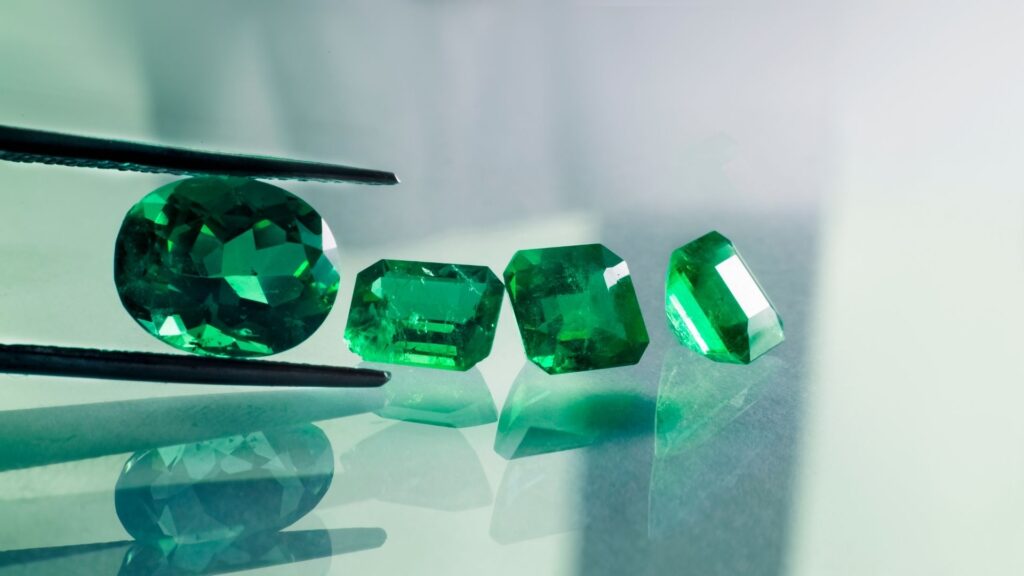
Asking the right questions before you buy a gemstone is one of the fastest ways to reduce risk. It helps you verify what you’re actually getting, avoid unpleasant surprises, and compare the price to the stone’s real quality and documentation.
Gem sales can vary widely in clarity and honesty. Two stones that look similar can differ in origin, treatment, lab grading, and even identity (natural vs. lab-grown), and those differences often drive the value.
This checklist approach matters because it forces proof, not just claims. If a seller answers clearly and consistently, you gain confidence in both the stone and the business behind it.
Before you assess the gem itself, check the seller’s credibility. A trustworthy seller is easier to verify, easier to contact, and more likely to stand behind their statements about identity, grade, and treatments.
Many gemstone problems start with weak business practices: unclear returns, no documentation policy, or vague answers about sourcing. Even a good-looking gem can become a bad buy if the seller won’t resolve issues after purchase.
Use these questions to confirm the seller is a real business with a clear track record. Good transparency usually shows up in details like location, return terms, and how they handle documentation.
Track record is especially helpful if you’re buying higher-value stones like emeralds, rubies, sapphires, or color-change gems. Ask how often they sell stones of your type and price range, and how they handle disputes when they arise.
Polished answers are not enough if the policies are unclear. Before you pay, confirm returns, refunds, repairs, and delivery timelines so you know what happens if the gem is not as described.
These questions protect you during the most sensitive stage: the period between purchase and receipt. If something goes wrong, a clear policy can save you time and money.
If you’re buying online, ask how delivery issues are handled. For example: do they use insured shipping, signature confirmation, and tamper-resistant packaging?
Also ask whether pricing changes after you receive the stone. A reputable seller will not bait-and-switch by changing the description or charging for “extra” documentation after you’ve already agreed.
Authenticity is the foundation of gemstone value. “Lab-grown,” “natural,” and “treated” are not just marketing terms; they describe how the stone was formed and whether it underwent processes to change appearance.
Before you compare prices, confirm what the gem is. If that classification is wrong, all later grading and “similar stone” comparisons become unreliable.
Ask the seller to state the classification clearly: natural gemstone, lab-grown gemstone, or natural gemstone that has been treated. Then ask for evidence in the form of documentation or testing results.
Natural means the stone formed in the earth over a long period. Lab-grown means it was created in a controlled facility, and it may still be “real gemstone material,” but it is not natural in origin.
Be careful with vague claims like “real” or “authentic.” Real can describe both natural and lab-grown, and “authentic” does not tell you which category you’re buying.
For many gemstones, optical features can overlap between categories. That’s why documentation and testing matter more than a photo alone.
Treated means the gemstone has been altered to improve color, clarity, or appearance. Treatments are common in the trade, but the type and extent of treatment strongly affect value and care.
Many sellers mention treatments in general terms, but you should ask for stone-specific details. “Minor treatment” can mean very different things depending on the gem type.
Good sellers answer with specifics instead of vague labels. If the seller can only say “treated for color” without naming the process, ask for their evidence or certificate details.
Gem certificates and grading reports are how you confirm that the stone matches the stated grade. “Grading” is the measured evaluation of attributes like color, clarity, and sometimes cut quality.
A certificate does not automatically mean the stone is flawless or overpriced. It gives you a baseline for what the stone was when evaluated, and it lets you compare with other stones using the same system.
Before you buy, make sure you understand what the certificate covers. Some documents provide full gemological grading, while others only confirm identity or treatment in limited terms.
Ask which lab issues the certificate and what kind of report it is. The lab name, scope of grading, and certificate number should all be available before purchase whenever possible.
If a seller refuses to provide the certificate number, ask why. Without the number, verification becomes difficult, and you may not be able to confirm the report matches the specific stone you received.
Also ask whether the stone is loose or mounted in the certificate photos. A certificate based on a loose stone might not perfectly match appearance after mounting if the stone is recut or replaced.
You want the gemstone’s key attributes in writing so you can evaluate fairness and compare alternatives. Ask the seller to provide the exact values from the certificate (or their own written grading, if they do not use certificates).
Common gemstone attributes to document include cut, color, clarity, carat weight, and measurements. Measurements matter because stones can be “graded similarly” while having different proportions that affect appearance.
If the stone is jewelry, also request the mounting-related measurements. For example, ask for total item dimensions and how the stone size translates to visual size.
For step-cut stones like emerald cuts and for mixed-clarity gems like many emeralds, proportions and inclusion visibility matter. Ask for any report notes about transparency, surface reach, or fracture/feather details when relevant.
Treatments are one of the most important disclosure topics in gemstone buying. They can improve appearance, but they also change value and can affect durability and long-term care.
Even when treatments are common, buyers still deserve clear, stone-specific information. “Treated” is not one category—it includes different processes with different risks.
Ask the seller to disclose any enhancement upfront and to describe it precisely. If the certificate does not mention it, ask whether treatment detection was performed and what the conclusion was.
Treatment disclosure questions are especially important for stones where enhancements are widespread, such as sapphire, emerald, ruby, and some commercial jade and quartz categories. The goal is not to avoid treated stones, but to avoid surprises.
If you receive only a general statement like “minor enhancement,” ask the seller to convert that into specifics. You can’t properly compare value without knowing the type and extent.
Also ask whether any treatment could be reversed. Some treatments can be stable for decades, while others may fade or become more visible over time.
Treatments can change how the stone behaves under heat, light, chemicals, and cleaning methods. “Durability” here means how well the stone withstands daily wear and common cleaning.
Always ask for care instructions tailored to the treatment type, not generic advice. Generic advice is fine for untreated stones, but treated stones may require special care or professional cleaning.
Ask whether the seller can share a care sheet or written guidance. A seller who takes treatment seriously usually provides practical instructions because they know customers will follow them.
Finally, ask what the seller will do if the stone’s appearance changes. For example, if you document care compliance and the color or clarity changes, will they assist with evaluation?
Origin matters because it can influence rarity, value, and sometimes even typical treatment expectations. “Provenance” is the documented history of where the stone came from and how it was sourced.
Origin claims are also a trust issue. A seller can say a stone is from a certain region, but without evidence that claim can be misleading or incomplete.
Ask for the origin claim and then ask for evidence. Even when full mining-source tracking is not available, the seller should be able to share documentation or a chain of custody from purchase to grading.
Be cautious of absolute claims without paper support. For some gemstones, lab reports focus on species and treatment rather than geographic origin, so the seller may need to provide additional documentation.
Also ask whether the stone has been marketed under a named “trade origin.” Some trade names can be helpful, but they can also oversimplify or merge multiple sources into one label.
Ethical sourcing is about how gemstones are mined, handled, and traded. You can’t fully “verify ethics” from a single seller message, but you can ask for transparency and compliance practices.
Ethical sourcing questions should not replace authenticity and documentation. But they help you understand whether the seller treats responsible trade as a real process rather than a marketing phrase.
If a seller cannot answer, ask what they can provide. A reasonable approach might be “we can document supplier origin at this level, but not deeper mine-level details.” Clarity is better than silence.
Price is not only about the stone’s beauty. It also depends on documentation quality, treatment status, market demand, and how the grading aligns with the current market.
A fair price can still be high, and a low price can be justified or risky. The goal of asking pricing questions is to understand the “why” behind the number.
Ask for a breakdown tied to measurable or documented factors. A seller who knows the market will be able to point to grade and documentation while also acknowledging rarity and demand.
If the seller cannot explain pricing in terms of grade and documentation, it may be difficult to judge whether you’re getting a fair deal. In that case, ask for comparable stones with similar certification and grade.
Also ask whether the price includes setting labor, mounting costs, taxes (if applicable), or future adjustments. For jewelry, the total value depends on both the stone and the workmanship.
Comparables help you see whether the seller’s pricing aligns with other stones of similar quality. Comparisons should be based on similar documentation and similar treatment status.
Be careful with misleading “apples-to-oranges” comparisons. A stone with a higher clarity grade may still look worse if it has worse color, inferior cut proportions, or stronger visibility of inclusions.
If the seller can show real comparables with matching documentation, that’s a strong signal of market knowledge. If they cannot, ask whether you can compare using independent sources after purchase, especially if you plan an appraisal.
Even with certificates, independent verification can add confidence—especially for expensive purchases. Not every buyer needs a third-party lab test, but you should know what options exist.
Independent checks are also helpful when a listing uses ambiguous terms or when the certificate is not easy to verify. Your goal is to confirm that the stone you receive matches the documentation.
Ask if the seller will support independent testing before you finalize payment or after delivery. A cooperative seller understands that serious buyers sometimes want second opinions.
Be realistic: mounted stones may require careful removal for testing. Ask how the seller handles testing logistics so you don’t damage the jewelry during verification.
Also ask who pays for the independent test. In many cases, you may pay for testing, but the seller should still agree on a resolution path if the results conflict.
Certificate verification is the step where you confirm that the document matches your exact stone. If the certificate includes a number and the lab supports verification, this can greatly reduce uncertainty.
If verification is not possible, ask what alternative verification the seller offers. Some sellers provide in-house testing notes or additional documentation from partner labs.
Keep in mind that even verified certificates can be mistaken or based on earlier evaluations. For the most expensive stones, plan for an appraisal or a second check with a qualified professional.
For jewelry purchases, the stone is only half the story. Poor mounting can reduce durability, affect how the stone reflects light, and increase the risk of damage even if the gemstone itself is genuine.
Inspection details also matter because the appearance of inclusions, scratches, chips, or surface wear can be affected by how the piece is set and photographed. The seller should provide enough information to confirm the item’s condition.
Ask questions that focus on safety and long-term wear. The goal is to ensure the design holds the stone securely and protects it from knocks.
If the item is pre-owned or refurbished, ask about polishing and whether any repairs were made. Also ask for pictures of the underside and prongs so you can evaluate craftsmanship.
Workmanship should match the price and the stone’s grade. A low-quality setting can turn a great gemstone into a frustrating purchase.
Before the item ships, request documentation that verifies the stone’s condition and the jewelry’s overall state. This protects you against “condition not as shown” disputes.
If the seller will not provide condition photos, ask what they can do instead. At minimum, ask for written notes describing any imperfections that are visible.
Also ask for packaging details. Insured shipping and careful packing matter because gemstone damage can occur in transit even if the seller’s description is accurate.
After you buy, you still need protection. Gemstone care errors can cause long-term damage, and after-sale support can determine whether you can maintain the piece properly.
Ask questions that clarify what you should do immediately after receiving the stone, what cleaning methods are safe, and what services the seller offers if something needs adjustment.
Care should match the gemstone type and treatment status. Untreated gems can often handle routine cleaning, but treated gems may require gentle methods to avoid damaging enhancements.
Ask how to handle everyday wear. For example, should you remove jewelry before swimming, using lotion, or applying hair products?
When a seller can provide clear care guidance, it suggests they understand the stone and its treatment realities. If they only provide generic advice, you may need to get specialized care instructions elsewhere.
After-sale support reduces the cost and stress of owning jewelry. Even if the stone is correct at purchase, you may later need resizing, professional cleaning, or warranty help.
Finally, ask whether the seller can recommend a trusted professional jeweler for care. Stone-safe handling is not always intuitive, especially for treated gems.
Support matters most when you need help quickly. Confirm communication channels for warranty and service claims so you don’t get stuck trying to resolve an issue with unclear instructions.
Use this quick list as your “ready to buy” checklist. Bring it to chats, email inquiries, and invoice review so you don’t miss key verification steps.
If you can answer these questions with clear, written details, you’re far more likely to buy with confidence. When a seller provides specifics and evidence, you can evaluate authenticity, grade, treatment risk, and value—without relying on guesswork.