
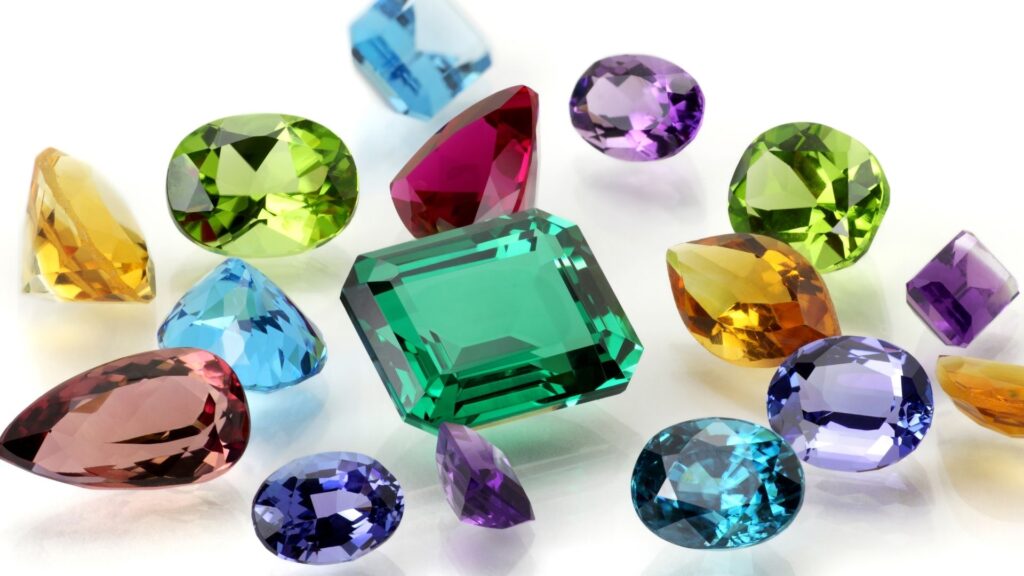
When shoppers say “color clarity cut carat,” they’re usually talking about the diamond 4Cs: color, clarity, cut, and carat weight. These four factors describe different sides of what makes a diamond look the way it does—and how it is priced.
The key idea is that no single “C” tells the whole story. A diamond’s beauty comes from how it reflects and transmits light (mostly the cut), how “white” or “warm” it appears (color), what’s happening inside and on the surface (clarity), and the stone’s size (carat).
You’ll typically see these grades on a report from an independent lab such as GIA (Gemological Institute of America) or IGI (International Gemological Institute). A grading report is not a marketing label; it’s a standardized way to describe a specific stone so buyers can compare fairly.
Diamond color grades describe how colorless a diamond appears to the human eye under standardized lighting. “Color” in diamonds doesn’t mean rainbow hues; it usually refers to traces of yellow or brown that can be present in the stone.
In simple terms: the fewer noticeable traces, the higher the color grade. Higher grades often cost more, but color isn’t always the factor that most affects face-up beauty.
Color can show up differently depending on the light source and the setting. Warm indoor lighting can make a diamond’s body color appear more visible, while daylight can make some stones look more neutral.
Labs usually grade diamond color on a scale, with “D” being the most colorless and letters moving toward lower color (more body color) as the scale continues. The most common ranges you’ll encounter are D, E, F (often grouped as “colorless”), then G, H, I, and so on (often grouped as “near colorless” to “slightly tinted”).
Exact scales can vary slightly by lab, but the practical meaning is consistent: as the grade number/letter goes down, body color becomes more noticeable, especially when viewed against a contrasting background.
“Near colorless” is a common phrase you’ll see for grades like G–J. It means the diamond has less color than many lower grades, but some traces can exist if you compare stones side by side under the right viewing conditions.
How you see it matters. If your goal is a crisp “white sparkle,” you may care more about color; if your goal is maximum fire and you prefer a warmer look, you might prioritize cut instead.
Color matters most when your diamond is in a setting that exposes the stone’s body color. It also matters more when the stone is viewed in strong side-by-side comparisons, such as at home on a neutral background.
Color can matter less when the setting enhances perceived whiteness or when the diamond’s light performance is excellent. Strong brilliance can overpower slight tint, making the diamond look lively even if the color grade isn’t the very top.
Ultimately, color “matters” when it affects your personal visual target. If two diamonds look different enough to bother you, color is doing its job.
Clarity describes how clear a diamond is, based on the presence of internal features (inclusions) and surface features (blemishes). Inclusions are tiny internal “characteristics” that occur naturally as the diamond forms, while blemishes are marks on the surface.
Because inclusions are often tiny, clarity is usually assessed under magnification (commonly 10x). The lab then translates what’s seen into a clarity grade so you can compare stones without searching for details yourself.
Important idea: clarity affects how much light can pass through the stone without being blocked or scattered. However, clarity is not the only driver of beauty; cut has a major influence on how bright a diamond looks.
Not all inclusions are equal. Size, number, and type matter, but placement matters just as much because it influences whether features interfere with the diamond’s path of light.
Some inclusions are “easy to map” on a report, which helps graders predict what might be visible. Features that sit near the center, near the table (top), or near edges can be more noticeable depending on the diamond’s cut proportions.
The report may also describe where features are located using terms like “table,” “crown,” “girdle,” and “pavilion.” In general, features closer to the table are more likely to affect what you see face-up.
Clarity perception is also affected by how the diamond is cut and set. A shallow or deep stone can change how inclusions line up with your view, sometimes making features more visible than a report alone suggests.
Clarity grading ranges are often grouped into broad steps, and many buyers look for “good value” clarity that stays eye-clean. “Eye-clean” means the diamond looks clean to the naked eye from a normal viewing distance under typical lighting.
Because inclusions can vary greatly even within the same clarity grade, your safest approach is to compare specific report details and ask about likely visibility. If you have access to a high-resolution video or in-person viewing, you can confirm whether the inclusions bother you.
Many budget strategies cluster around mid-range clarity grades where the stone still looks clean. The best choice depends on the cut, shape, and your tolerance for visible features.
If your priority is maximizing sparkle, you may be better off spending on cut and color while keeping clarity “good enough” to remain eye-clean. If you want a near-perfect look, spending more on clarity can reduce the risk of visible features.
Cut grade is about how well the diamond is shaped to control light. This factor strongly affects brilliance (bright flashes) and fire (colorful flashes), which is why cut is often the most noticeable 4C once you’re in a reasonable color and clarity range.
A diamond with excellent cut proportions can look brighter even if it is not the very highest color or clarity. In many real-world comparisons, cut quality makes a bigger visual difference than small changes in color or clarity.
It’s also the one 4C you cannot “fix” after purchase. The cut is the diamond’s geometry, and only a recut could change it—which is rarely practical for natural diamonds.
Cut grading typically considers proportions, symmetry, and polish. Proportions are the angles and relative depths of the crown and pavilion, while symmetry describes how consistently the facets are aligned, and polish is the finish of those facets.
These attributes control how light enters the diamond, how it reflects internally, and how it exits to your eyes. The result is that a well-cut diamond usually looks brighter and more “alive,” with a strong pattern of sparkle.
In labs, cut grades are often summarized into broad categories like Excellent, Very Good, Good, and so on. The exact labels depend on the lab, but the takeaway is consistent: higher cut grades indicate better light performance.
Many “ideal diamond proportions” are discussed online, but don’t treat any single proportion number as a magic formula. The lab’s cut grade is a practical summary of how multiple factors work together.
Shape is your preference (round, oval, emerald, cushion, princess, and more), while cut grade is about how well the diamond is fashioned. Some shapes can show light performance differently because their facet patterns and proportions differ.
For example, round brilliant diamonds are widely optimized for light performance, which is why they often perform extremely well on sparkle tests. Other shapes can also be excellent, but it matters even more to evaluate specific cut parameters.
If you love a particular shape, focus on finding a stone with strong cut quality within that shape. This is especially important for shapes where the “face-up spread” and facet arrangement can change how inclusions and color appear.
In short: choose the shape you want, then choose the best possible cut you can within your budget. That sequence helps ensure the diamond looks lively every time you glance at it.
Carat weight measures the mass of the diamond, commonly described as “carat” (e.g., 0.90 ct, 1.00 ct, 1.20 ct). It’s a standardized unit, so two diamonds labeled the same carat weight weigh the same, regardless of color or cut.
But carat weight is not the same as “size you see.” Diamonds of the same weight can appear larger or smaller depending on how they’re cut, particularly their proportions and depth.
Carat also influences price in a way that can be jumpy. Many price increases happen at “milestone” weights, and those jumps can be steep compared with moving slightly within other grading ranges.
The diameter (or length/width for non-round shapes) is influenced by the diamond’s cut proportions. A shallower or deeper diamond can change how much of the weight turns into visible surface area.
For example, two diamonds at the same carat can differ in how “spread” they look. A well-cut diamond with better proportions for face-up size might give you more apparent size for the same weight.
That’s why it’s smart to compare measurements on a report, not just the carat number. Face-up dimensions and depth percentage help you understand what you’re likely to get visually.
When you’re choosing, ask for the exact measurements and compare them across options. This helps prevent “surprise shrinkage” where a stone seems smaller than the carat label suggests.
Diamond pricing often increases sharply at popular “step-up” carat thresholds. These are common breakpoints like 0.90 ct, 1.00 ct, 1.10 ct, 1.50 ct, and 2.00 ct, though the exact price jumps vary by market.
You can sometimes improve your diamond visually by staying just below a major milestone and reallocating the saved budget to cut quality or color. That can lead to a diamond that looks better day-to-day because cut and color are more “always visible.”
The best strategy is not always to avoid milestones, but to compare honestly. If the milestone diamond has noticeably better cut or more favorable color/clarity than the alternative, the step-up might be worth it.
Think of carat as “how much diamond you bought,” but think of cut, color, and clarity as “how that diamond performs in your eyes.” A balanced choice usually wins over a single big number.
Balancing the 4Cs is about matching the diamond to your priorities. Some buyers want maximum sparkle, others want the brightest “white” look, and others want a certain size for presence on the hand.
A useful way to plan is to decide what you won’t compromise on. Then you decide what you can accept as “good enough” to keep the budget stable.
A common value strategy is to rank the 4Cs by impact on appearance. Many shoppers get strong results by prioritizing cut quality for light performance, then choosing a color grade that looks white to them, and finally selecting clarity that is eye-clean.
This does not mean “ignore clarity” or “buy the cheapest color.” It means you can often avoid overpaying for near-invisible differences, especially when cut and color are within a good range.
Here’s a typical ranking strategy:
If you’re choosing between two diamonds and one has a clearly better cut, that often wins even if it has slightly lower color or clarity. But if the color difference is large enough to be obvious face-up, then color may become more important than a modest cut improvement.
Reports are essential, but diamonds are visual objects. Two stones with similar grades can look different, so the best check is to compare how they look in person or with high-quality video.
When you inspect a diamond, look at it in multiple lighting conditions. Daylight, warm indoor light, and shadows can reveal differences in color, contrast, and sparkle.
If the seller allows it, ask to see the diamonds side by side. Face-up color and clarity differences are easier to judge when you’re comparing directly, and it reduces the chance you’re relying on assumptions.
You can also ask about return or exchange terms. Because human perception is personal, a policy that lets you confirm the look can reduce buying risk.
A setting is not just a metal frame; it affects how light reaches your diamond and how you perceive its color and clarity. The same diamond can look slightly different when mounted in different ways because of reflections and background contrast.
Metal color, prong style, and whether the stone is fully enclosed can all change how color tint appears. The goal is to choose a setting that supports the diamond’s strengths.
If you’re trying to maximize value, a clever setting can help a diamond look closer to a higher grade. However, a setting can’t fix major issues like poor cut performance or major visible inclusions.
A diamond grading report is a formal record of the diamond’s measured and observed characteristics. It’s how you verify what you’re buying, and it helps you compare diamonds from different sellers without guessing.
Reputable labs like GIA produce reports that are widely trusted in the industry. Always check that the report number matches the stone you’re considering, and ensure the lab is listed clearly.
Most buyers start with the big four: color grade, clarity grade, cut grade, and carat weight. That’s a solid start, but grading reports often include additional details that matter for real-world appearance.
Look for the cut-related information and measurements, not just the label. Proportions such as table size, depth percentage, and crown and pavilion angles can help predict how the diamond will behave visually.
Also check report details for fluorescence, if the report includes it. Fluorescence is the diamond’s response to ultraviolet light, and in some diamonds it can slightly affect appearance under certain lighting conditions.
If you see fluorescence listed, ask the seller how it looks in person. The impact varies by diamond and often depends on the stone’s color grade and environment.
Many shopping mistakes come from misunderstanding what grades truly mean. One common issue is assuming that a higher clarity or color grade always looks dramatically better to the eye, even though the differences can be subtle.
Another misconception is treating “cut grade” as the only cut-related factor without considering proportions. Two diamonds can share the same cut category but still have different measurements that change how they spread or how they show contrast.
If you’re using a lab report, treat it as a decision tool, not a final verdict. Pair it with visual checks so you align the diamond’s measured traits with your personal perception.
Buying a diamond is as much about process as it is about grades. The best outcomes usually come from comparing multiple options with similar priorities and verifying the stone’s report and policies before purchase.
Use reputable sellers who provide transparent details, including the exact grading report and return options. If a seller won’t share report information or encourages you to skip verification, that’s a red flag.
Comparing diamonds becomes faster when you use a consistent checklist. Don’t compare everything at once; compare by priority first, then verify whether the tradeoffs align with what you care about.
Here’s a practical quick-compare checklist:
If one stone is clearly better in your top priority without making the next priority dramatically worse, it’s often the better deal. The goal is to avoid paying a premium for a trait you can’t see or don’t care about.
Good sellers will answer questions clearly and in detail. You don’t need to interrogate them, but you should confirm the basics that affect value and risk.
Another practical question is whether the seller can show two options in the same setting. Seeing diamonds in the same mounting setup helps isolate the effect of the 4Cs.
Finally, ask about certification verification. If the report is from a recognized lab, the seller should clearly share it, not just describe the grades.
Use this checklist to turn the 4Cs into a clear plan. The goal is to make your shopping decision systematic, so you can balance sparkle, appearance, and budget.
If you prioritize maximum sparkle, start with cut. If you want the brightest “white” appearance, move color up in priority. If your goal is balanced value, pick cut quality, choose a color grade that looks neutral to your eye, and keep clarity at a level that stays eye-clean.
When the 4Cs align, the diamond looks better than any single grade number could suggest. That’s the real meaning of “color clarity cut carat explained”—it’s a system for choosing the right diamond balance for your life, style, and budget.