
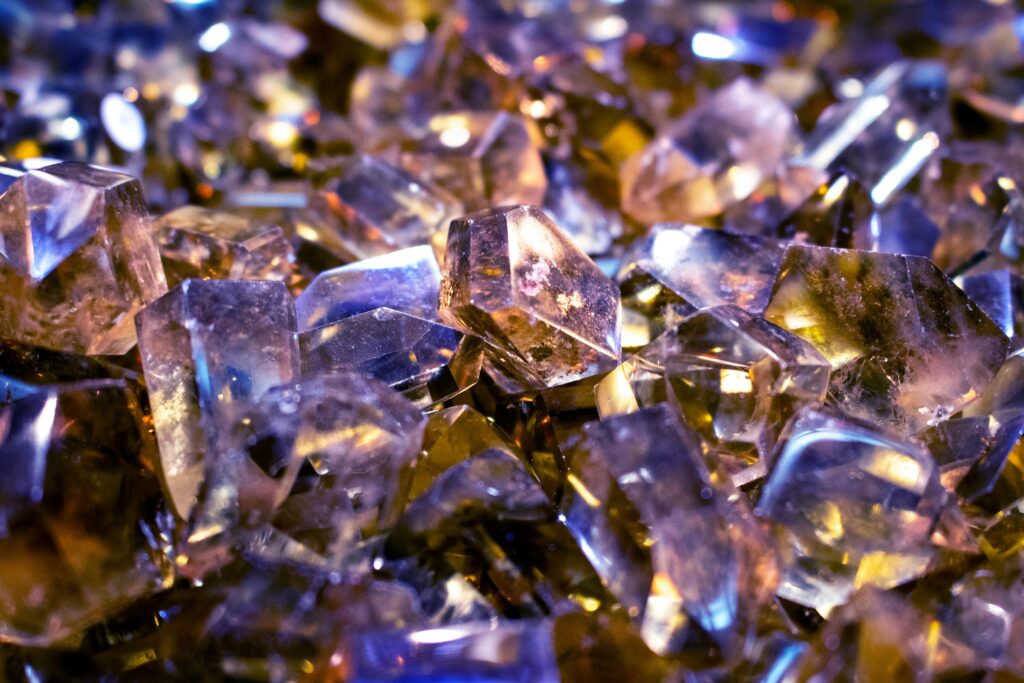
Ametrine is a rare quartz variety that shows both purple (amethyst) and yellow to golden (citrine) colors in the same crystal. It is “special” mainly because most quartz forms with one color zone, while ametrine naturally combines two. This bi-color effect is why collectors often treat it as a standout quartz gem.
The name “ametrine” is commonly used to describe this combined color quartz, but the underlying gemstone is still quartz. Quartz is a mineral made of silicon and oxygen, and it forms crystals in many colors depending on trace elements and how it grows. In ametrine, the crystal growth history creates separate purple and yellow regions.
In practice, “bi-color” means you can see two distinct color types within one piece—usually a purple zone and a yellow/orange zone. The purple side is related to amethyst, while the yellow/golden side is related to citrine. “Side” here can mean half-and-half, a stepped pattern, or a gradient transition.
The colors are not artificial in nature when the stone is genuine ametrine. They come from the way the crystal formed and later responded to heat, radiation, or iron-related chemistry during geologic time. Because this history is hard to reproduce, natural ametrine is limited compared with standard amethyst and citrine.
Bolivia is the classic and most well-known source for natural ametrine. When gem dealers say “ametrine from Bolivia,” they are usually pointing to the traditional mining region and typical stone styles seen in the trade. This does not mean other regions cannot produce similar material, but Bolivia is strongly associated with the modern market reputation.
In typical Bolivian ametrine, you may see a more noticeable separation between purple and yellow zones than in many mixed-color experiments. Color distribution varies a lot, so it helps to think in patterns rather than expecting one exact look. For many buyers, the charm is precisely that each stone shows a slightly different balance of amethyst and citrine tones.
The visual appeal of ametrine comes from how the two colors meet. You might see a clear boundary, a soft blend, or a “step” where the colors change in bands. The most attractive stones show both colors clearly and maintain good brightness.
When evaluating color, it helps to look at the whole stone, not only the face. Wearable cuts such as pendants and rings also show edges and prongs, which can hide or reveal zoning. Because the purple and yellow sides can have different saturation, the cut can strongly influence how the colors “read” at a glance.
Ametrine usually shows purple changing to yellow and sometimes to warm orange. The transition can be sharp or gradual, but you can often trace the crystal’s natural growth features. Buyers often prefer a pleasing balance where neither color looks weak or washed out.
Common zoning patterns include:
Within each zone, saturation can also vary. One stone may be deeply saturated on the purple side and lighter on the yellow side, which can affect overall “color harmony.” The most sought-after pieces often have strong tones on both sides, plus good transparency so light can travel through.
Like other quartz, ametrine can show internal features such as tiny inclusions, growth lines, or faint cloudiness. “Clarity” in gemstones means how clear and free from visible internal flaws the stone appears to the eye and under magnification. With quartz, small features are not automatically a problem, but clarity still affects brightness and sparkle.
The cut determines how well the zoning is displayed. If the boundary between colors is positioned well under the table (the top flat facet), both colors can look vivid when viewed from the front. If the stone is cut with the best zoning too high or too low, one color may be reduced to a thin edge.
Faceting also affects how saturated the colors look. Thinner areas may appear lighter because they absorb less light, while well-proportioned facets can increase “fire” and sparkle. When shopping, you should view the stone from different angles in daylight to see whether the amethyst and citrine regions stay attractive.
Gemstone “properties” usually refers to two ideas: physical performance and metaphysical beliefs. Physically, ametrine is valued for its beauty, hardness, and ability to take a polish. Metaphysically, ametrine is often described as a balancing stone because it contains both purple and yellow energies in one gem.
From a careful gemology point of view, most “healing” and “meaning” claims are not proven in a way that can be measured like lab data. However, many people use ametrine in rituals, meditation, or personal intention-setting because they find it meaningful. Your personal experience and your tradition matter more than universal guarantees.
Ametrine is widely described as combining qualities linked to both amethyst and citrine. Amethyst is often associated with calm, focus, and restful energy, while citrine is often linked with warmth and motivation. Because ametrine physically combines these colors, many traditions treat it as a “blend” of those themes.
Common associations you may see include:
It is also common for sellers to present ametrine as unique compared with purchasing amethyst and citrine separately. That said, these are belief-based ideas, and different people may interpret the same stone differently. If you use crystals for intentions, choose the meaning that genuinely resonates with you.
On the Mohs scale, quartz rates around 7, which is fairly strong for everyday jewelry. “Mohs hardness” is a simple scale of scratch resistance, where higher numbers scratch lower numbers more easily. While quartz is durable, it can still chip if it takes a sharp impact.
Because ametrine is quartz, it handles normal wear better than softer gemstones. It suits rings, pendants, earrings, and bracelets when the setting is secure. For ring wear, consider a protective bezel or well-secured prongs to reduce edge stress.
Be mindful around chemicals and heavy impacts. Citrus juices, harsh cleaners, and strong acids can damage the polish or alter the look of some stones over time. For the best routine, remove jewelry before intense cleaning or sports and put it back after.
Ametrine looks special, but its appearance can overlap with other gems in the market. Many shoppers confuse it with mixed quartz, heat-treated quartz, or stones described with similar-sounding names. Learning key differences helps you avoid paying ametrine prices for something that is not the real bi-color quartz experience.
When comparing gemstones, focus on two things: origin of color (natural zoning vs treatment) and how the colors are distributed. A genuine ametrine typically shows two recognizable color types in one piece with natural-feeling zoning. Imitations and look-alikes may mimic the pattern but lack the typical gemstone behavior under inspection.
Amethyst is quartz that is purple throughout, not purple plus yellow. If a stone is fully purple (even if it has lighter or darker areas), it is usually amethyst or amethyst-like quartz. True ametrine should show a clearly present yellow/golden component as well.
When shopping, look for:
Some stones might be described as “ametrine-inspired,” meaning they have both colors but may not be the natural bi-color quartz variety. In that case, ask for gem identification details rather than relying on marketing language alone.
Citrine is typically yellow to golden quartz, usually with no purple zones. If the stone has only yellow and orange tones, it is more likely citrine or a heat-treated yellow quartz. Citrine can also show internal color concentrations, but it should not present clear purple amethyst regions.
One practical confusion is that yellow quartz can have different hues depending on light and thickness. A “warming” yellow does not automatically mean citrine, and a faint purple tint does not automatically mean ametrine. For ametrine, the purple region should be recognizable as true amethyst-type color.
You can reduce confusion by checking whether the stone’s documentation lists the material as ametrine (not just “quartz”). If the seller cannot explain what makes it ametrine, consider treating it as uncertain until proven otherwise.
The market includes stones that are sold as “bi-color quartz,” “mixed quartz,” or “two-tone quartz.” Some may be naturally zoned, while others may be composites, fused stones, or stones with confusing descriptions. Because quartz is common, naming can be inconsistent, so verification matters.
Common market mix-ups include heat-treated quartz that looks multi-toned and stones where the colors are present but the gem is not the same material category. Even when colors appear beautiful, you still want correct identification to match the price you pay. Reputable sellers will be clear about what they are selling and provide evidence when possible.
A key buying rule is to ask questions about identification. If the listing is vague or avoids the terms “ametrine,” “quartz variety,” or “origin,” you may want to slow down and verify. Quality jewelry should be easy to explain in gemological terms.
Quality ametrine is not only about the label—it is about how the stone looks and how reliably it is identified. A smart purchase blends visual evaluation with trust in the seller. Even with a great color, a weak cut or cloudy clarity can reduce the final beauty.
If you want the best value, compare stones under similar lighting and ask for details before you commit. Quartz can show color shifts due to thickness and cut angle, so judging in consistent light helps. Many buyers also compare against a known reference stone if they can.
Use the checks below to evaluate a potential purchase. You can do most of this with good photos, but viewing in person is even better for zoning and clarity.
When you inspect zoning, consider your intended use. A ring stone should maintain appealing color under different hand angles, not only when viewed flat on a counter. A pendant may show more of the side zones, which can change the overall look.
Also be alert to color imbalances that hide one side. A stone with a bright purple but barely-there yellow may still be attractive, but it may not be “balanced” enough for buyers looking for classic ametrine beauty. Decide what “best” means for your taste.
Because ametrine sits in a premium and sometimes confusing market, documentation can reduce risk. “Certification” typically means a gemological report from a professional lab that identifies the stone and often describes its key features. Not every stone will have a certificate, but established sellers can explain what tests they performed.
When purchasing, ask whether the seller offers:
Testing methods can include spectroscopy and refractive index measurement in a lab setting. These tools help distinguish quartz varieties and confirm whether color results match the claimed material. If a seller refuses to discuss identification methods for a high-value stone, that is a red flag.
At the same time, do not assume that a lack of certificate automatically means the stone is wrong. Smaller transactions may not include lab reports, but reputable sellers still provide clear identification, transparent photos, and honest descriptions. The goal is to buy from a source that makes you comfortable with both the gem and the truth behind the listing.
Ametrine is quartz, which means it is relatively easy to care for and can keep its polish for years. The main risks in everyday care are scratches from hard grit, and dulling from residue buildup. With simple habits, you can keep the bi-color look bright and clean.
Even though quartz is durable, it still benefits from gentle handling. Avoid dropping jewelry, and reduce contact with rough surfaces. If you wear ametrine frequently, treat it like a gemstone that can be scratched by sand or metal filings.
A safe routine is usually gentle soap and water with soft tools. Avoid harsh chemicals and ultrasonic cleaning if the setting is delicate or if you suspect the stone has inclusions that could trap debris. If you are unsure, start with the gentlest method.
If your jewelry is set with metal prongs or glued components, be careful not to soak too long. For travel or daily wear, a microfiber wipe after use can prevent residue from building up. This is especially helpful for rings that collect hand oils and lotions.
Also protect ametrine from prolonged heat or extreme thermal shock. While quartz is generally stable, sudden temperature changes and harsh cleaners can stress settings. Treat your jewelry like a fine tool: clean it gently and avoid unnecessary exposure.
Storage matters because quartz can scratch other gemstones. Store ametrine separately or in a pouch, ideally with a soft lining. Keep it away from harder materials that can cause abrasion.
For long-term preservation, consider these habits:
Over time, even durable stones can lose polish if they are exposed to constant grit. If you frequently cook, garden, or work with tools, remove your ametrine jewelry during those activities. A small routine now can preserve the beauty of the bi-color zoning for years.
Bolivia’s gem culture is often discussed through the lens of mining, craftsmanship, and trade routes rather than just individual stones. Even if you are not traveling to mine, you can approach the subject like a journey: learn where the material comes from, then how it becomes jewelry. This “context” often makes each stone feel more meaningful.
Ametrine’s story is closely tied to the region’s history of quartz mining and the cutting traditions that followed. In many producing regions, rough stones move through a chain of cutters, polishers, dealers, and designers. Your purchase connects you to that network, so it is worth thinking about how stones reach the market.
If you plan to explore the idea of Bolivia’s gemstone destination, think beyond the mine itself. Look for local markets, cutting communities, and educational resources that show how quartz varieties are recognized and styled. Understanding the environment helps you interpret why certain patterns are common in Bolivian stones.
Travel-style learning can include:
This approach also helps you spot marketing exaggeration. When you understand how stones are processed and why certain patterns occur naturally, it becomes easier to judge what looks realistic and what might be staged. That is a practical “traveler’s skill” for gem shopping anywhere.
Ethical sourcing is not a single checklist, but it is a set of questions you ask before you buy. For gemstones tied to a specific origin claim, you can look for transparency about how material is sourced and traded. Even small steps can help move the market toward better practices.
When choosing vendors, consider asking:
Remember that “ethical” also includes truthful description. Overstating origin or blurring identification can mislead buyers even if no obvious harm is visible. By buying from responsible sellers and asking good questions, you support a market where quality and honesty go together.
Ametrine from Bolivia is a rare and visually satisfying quartz variety where amethyst and citrine color zones exist within the same stone. Its charm comes from the natural meeting of purple and yellow, often with attractive zoning patterns and a balance of saturation. Because it is still quartz, it also offers good durability for everyday jewelry.
To choose quality, evaluate the stone’s color balance, clarity, and cut positioning—not only the marketing name. Compare it to amethyst and citrine by looking for clear purple-and-yellow presence in one piece, and be cautious with “bi-color” listings that lack clear identification. Finally, care for your jewelry gently with mild cleaning, thoughtful storage, and secure settings.
If you shop with gemological curiosity—asking about verification, documentation, and responsible sourcing—you will get more confidence in what you buy. Ametrine becomes more than a pretty stone when you understand where it comes from and how its bi-color beauty is created. That combination is why it remains a standout among quartz varieties.