
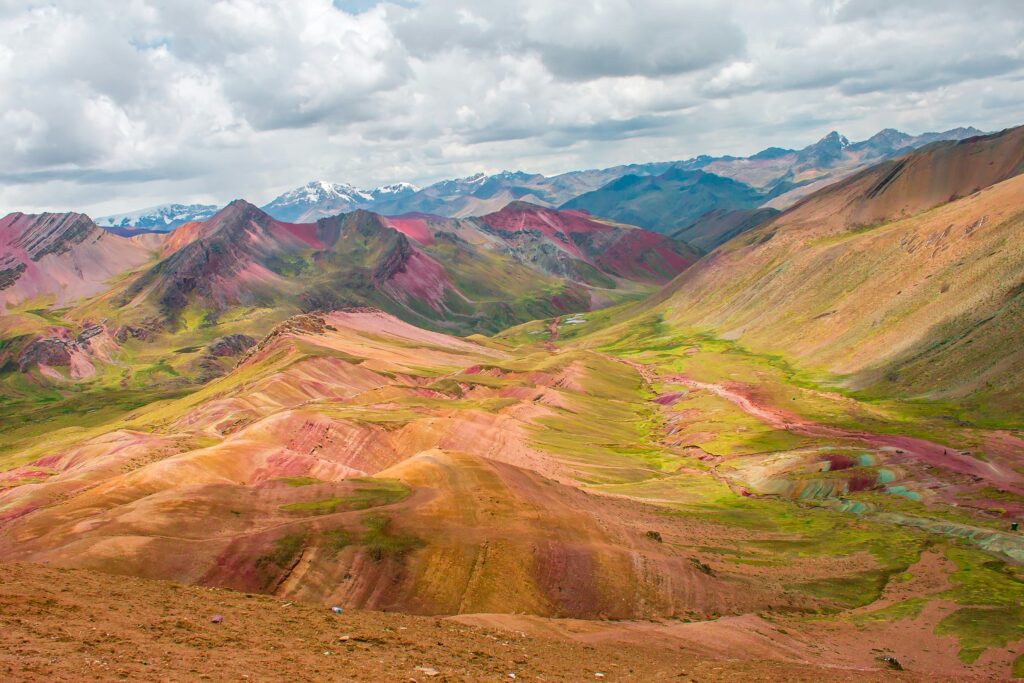
Bolivia, Peru, and Chile sit on the same major mountain system—the Andes—and that shared geology helps explain why the region is so famous for gemstones. Across this belt, volcanic rocks, hot fluid activity, and long tectonic history created mineral deposits in different shapes and colors.
Even though the countries share a common “Andes story,” each area developed its own gemstone character. Market names and local mining regions also shape what travelers see most often, from Bolivia’s two-tone ametrine to Chile’s turquoise-green Atacama chrysocolla.
When visitors search for “Andean gemstones,” they usually run into a short list of signature materials. These may include ametrine, sunstone, chrysocolla (often labeled as Atacama chrysocolla), and several copper and quartz-related stones.
To shop confidently, it helps to learn what each gemstone is supposed to look like and what to check before buying. Many issues in the market involve dyed stones, glass fills, or misleading labels rather than obvious counterfeit products.
Bolivia is strongly associated with quartz-based gemstones, especially ametrine and related mineral mixtures. Travelers often encounter these stones as polished cabochons, beads, and small cut pieces meant for rings and pendants.
Bolivian markets also show many copper minerals and blue stones, but the most recognizable “signature” product for many shoppers remains ametrine. Its color zoning and natural look are the main reason it became a global reference point for Andean jewelry.
Ametrine is a variety of quartz that shows two distinct colors in the same stone, typically amethyst purple and citrine yellow or golden. The colors are often separated into zones, bands, or curved boundaries rather than blending into one uniform shade.
In person, look for a clear contrast between the purple and yellow parts. A strong hint of authenticity is the natural-looking zoning that follows internal growth patterns, not a perfectly straight color split like you would expect from a simple surface process.
Because “two-tone quartz” can be confused with treated material, you should also know common claims and imitations. Some stones are dyed or manufactured to mimic the look, and some may be labeled too broadly if the seller is trying to move mixed inventory.
If the stone is faceted, the zoning should still appear internally and not vanish at edges. If it is a cabochon, the color zones should remain consistent across the face and around the dome.
Beyond ametrine, Bolivia’s copper-rich and mineral-diverse geology can lead to striking blue stones. Azurite is one of the better-known examples, typically seen in intense blues that range from deep electric tones to softer sky shades.
Quinoaite is a less widely known name you may encounter in certain markets, often described as a copper-related mineral typically associated with blue-green to blue looks. Even when the name is correct, sellers may offer the stone in mixed forms, such as rough specimens, clustered material, or polished accents.
For these secondary stones, buyers should rely less on the label and more on clear visual and lab-style checks. Ask for details on the origin and whether the material is natural, stabilized, or enhanced.
When you see rough or composite clusters, inspect the boundaries carefully. Natural mineral growth typically looks irregular and mineralogical, while obvious glue lines or synthetic seams suggest assembly or enhancement.
Peru’s gemstone identity is often linked to feldspar stones and opal-related materials, with bright color and attractive display effects. Many Peru gemstones are sold as cabochons or well-polished pieces meant to show the stone’s internal “play.”
Peruvian vendors may market stones by appearance and local mining stories rather than by strict lab classification. That is not always a problem, but it makes it important to ask questions and compare multiple pieces side by side.
Sunstone is typically a feldspar gemstone famous for its sparkly flashes, sometimes called “aventurescence.” This effect comes from tiny internal plate-like inclusions that reflect light, producing a starry or glittering look when the stone is moved.
In many stalls you may see “rainbow” sunstone, which refers to stones that show flashes of several colors rather than only one. The rainbow impression often depends on the angle of light, how the inclusions are oriented, and how the cabochon or cut is shaped.
To evaluate sunstone quality without heavy jargon, focus on how the sparkle behaves across the surface. A high-quality piece usually shows consistent flashing when tilted, with an attractive color body tone.
If a vendor’s description sounds dramatic but the stone shows weak or spotty sparkle, treat the claim with caution. Ask whether the sparkle comes from natural inclusions and whether any enhancement like dye is used.
Opal is another gemstone category commonly associated with Peru, often sold as “opal-like” stones or as materials with a soft glow and color play. Because opal types can vary widely, you should confirm what type the seller means and how the stone is treated.
In Peruvian markets you may also see chalcedony, quartz, and other decorative stones sold for their color or translucency. These can be attractive, but their value comparison depends heavily on whether the seller is naming a specific mineral variety or using broad trade terms.
When comparing similar items, prioritize what you can verify by sight: color pattern, clarity, and stability of the glow in different lighting. If possible, request the seller’s best explanation of the material and treatment before you commit.
If you see stones described as “fire opal” or “mix,” ask whether they are natural opal or composites. Composite and treated opals can still be beautiful, but they should be priced and labeled differently than fully natural stones.
Chile is well known for copper-related minerals and unique blue-green materials linked to desert mining regions. Tourists often hear about gemstones connected to the Atacama area, including chrysocolla commonly sold under the name “Atacama chrysocolla.”
When shopping in Chile, you will likely encounter both polished cabochons and rough specimens. The rough stones often display more natural banding and texture, while polished pieces highlight color and surface pattern.
As always, the name alone is not enough—chrysocolla can appear mixed with other minerals, and sellers may use terms loosely. The key is to understand what “hallmark features” look like for the material you are buying.
Atacama chrysocolla is usually recognized for its blue to blue-green range, sometimes with darker streaks or banded patterns. These colors are commonly tied to copper minerals and the way minerals filled pores or fractures over time.
In rough specimens, chrysocolla may appear as a porous or veined material mixed with quartz or other host minerals. In polished cabochons, you may see smoother surfaces with banding that forms a pleasing “landscape” effect.
When evaluating a polished piece, look for stable color across the stone and a surface that seems evenly polished. Also check for signs the stone may be a composite or treated material, such as unusual uniformity or suspicious surface sheen that looks like resin.
If a seller offers several “chrysocolla” stones at very different prices, compare their surface quality and how the color transitions. Ask whether the material is natural chrysocolla, chrysocolla mixed with host minerals, or a stabilized/composite product.
Besides Atacama chrysocolla, Chilean markets may present other copper minerals and decorative stones tied to northern mining regions. You may also see quartz varieties, chalcedony, and mixed mineral specimens sold as single items or sets.
Visually, these alternatives often differ in hardness, texture, and how they take a polish. Copper minerals can be softer and more porous than quartz, which affects both durability and what a polished surface should look like.
From a shopping perspective, your best approach is to treat each stone type as its own category and not assume every blue-green item is “chrysocolla.” Confirm the mineral name, and ask how it was stabilized if it is described as porous.
If you are unsure of the mineral, focus on observable traits and demand clarity from the vendor. A clear description of the material’s composition is a better sign than a catchy regional name.
Identifying gemstones while traveling is mostly about consistent observation. You cannot rely on one quick glance, because many different minerals share similar colors and marketing names.
A practical approach is to evaluate the stone in layers: color and pattern first, then transparency and inclusions, then hardness and surface condition. This helps you spot common issues like dyed material, composite pieces, or stones that are mis-labeled.
If possible, view the stone under both daylight and shop lighting. Color can shift under warm lamps, and a “perfect” color in one lighting condition may be less impressive in neutral light.
Quality cues are the same ideas gemologists use, but you can apply them easily at a market counter. “Color” should be vivid and internally consistent, “clarity” relates to how visible internal features are, “cut” or “shape” controls how the stone shows light, and “luster” is the overall shine.
For cabochons, cut is about the dome shape and polish quality. For faceted stones, cut affects sparkle and how well zoning or color is displayed through the facets.
Price is often linked to these cues, but the relationship can be distorted by treatment and marketing. Use the cues to compare stones of similar type, and ask whether higher price claims are about better natural material or only better finishing.
When you inspect multiple stones, keep notes on what you see. Even simple notes like “strong zoning, few dark patches” help you avoid buying impulsively.
In Andean markets, the main risks are not always “fake stones,” but stones with undisclosed treatment or stones sold under the wrong name. Dyed quartz, assembled composites, stabilized porous copper minerals, and glass-like substitutes can all appear in traveler-facing inventory.
A treatment is any process that changes the stone to improve appearance or stability. Dye is added color, stabilization uses resins or backing to hold fragile porous material, and filling can hide cracks.
To protect yourself, ask direct questions and look for physical clues. If a stone is treated, the vendor may still sell it honestly—what matters is whether you are told and priced appropriately.
If the seller refuses simple questions like “Is it natural?” or “Was it treated?”, treat that as a warning sign. A good vendor can explain the stone in plain language and discuss any enhancements.
The best way to buy Andean gemstones while traveling is to compare multiple vendors and ask for consistent information. Choose a few market stalls or shops, inspect similar stones, and then decide based on evidence—not just the story on a sign.
Provenance matters, because origin and treatment affect value and authenticity. “Where it came from” and “what was done to it” are two separate questions that you should keep separate.
Also remember that quality can vary even within the same gemstone type. A smaller stone with better zoning, fewer surface flaws, or stronger sparkle can be a better choice than a larger but visually weaker piece.
Ask questions that are specific and easy to answer. You want clarity on origin, whether the stone is treated, and whether the stone is natural or lab enhanced.
For ametrine, ask how the two-color zoning forms naturally and whether any dye or enhancement is used. For sunstone, ask whether the sparkle effect is natural inclusions and whether the stone has been treated. For Atacama chrysocolla, ask whether it is stabilized and what host materials are present.
To avoid overpaying, compare stones that look similar and share the same category. A cheap “similar-looking” piece may actually be a different mineral, dyed material, or a composite.
Instead of focusing only on the vendor’s brand or regional name, compare observable features you can check in seconds. Size matters, but visual quality and internal integrity often matter more for long-term satisfaction.
If prices vary widely, ask why in plain terms. A vendor who can explain “better color zoning” or “more natural flash” is giving you usable information; a vendor who only cites mystery reasons is harder to trust.
Responsible buying is about legality, transparency, and reducing the chance of purchasing misrepresented stones. Always consider local rules for mining goods and the import/export steps for carrying gemstones across borders.
Before you travel, check the current requirements for export permits and customs documentation. After you buy, keep receipts and any available documentation so you can show what you purchased if asked.
Ethics also includes avoiding purchases that encourage illegal activity. If a vendor cannot explain origin in a reasonable way or discourages paperwork, treat that as a red flag.
Finally, think about care and longevity. A stone that needs stabilization or special cleaning may not be the best everyday piece if you plan to wear it frequently.
A good gemstone route balances travel logistics with access to markets that actually sell gemstones to tourists. Because each country has different hotspots, a flexible route lets you compare stones across regions rather than buying all at once.
One practical idea is to start in Bolivia for ametrine-focused shopping, then travel to Peru for sunstone and opal-related finds, and finally end in northern Chile for copper mineral materials like Atacama chrysocolla. This sequence also helps you build visual knowledge, so you can spot differences more easily as you travel.
Altitude and weather can affect comfort, shopping time, and the quality of your observation. Markets may be outdoors or in bright storefronts where sunlight and heat shift how colors appear.
Plan short inspection sessions and take breaks, especially in high-altitude areas. If you feel tired or dehydrated, you may miss subtle quality issues like surface damage or unstable color.
Also consider that lighting changes in the day. Check stones in daylight and under neutral indoor lighting when possible so your color judgment is not biased by one environment.
Bring a few tools that make evaluation easier and reduce misunderstandings. Even simple items like a lens and a notebook can help you compare stones consistently and avoid relying on memory.
When transporting stones, use protective packaging so gems do not scratch each other. If you buy multiple pieces, label them with purchase details so you can remember what you inspected.
If a seller allows it, examine the stone from different angles to see how zoning or sparkle changes. A gemstone’s “behavior” under light is part of its identity, not just its static color.
Bolivia, Peru, and Chile offer distinct gemstone experiences shaped by Andean geology, but the details matter at the counter. Learn the signature looks—ametrine’s two-tone zoning, sunstone’s sparkle effect, and chrysocolla’s blue-green banding—and use them as visual anchors.
Before paying, verify key facts with direct questions about origin and treatment. Ask whether stones are natural or enhanced, and compare stones by color, clarity, cut/shape, and luster rather than by reputation alone.
When you combine good observation with responsible purchasing and proper documentation, you can enjoy your Andean gemstone finds with confidence. The best souvenir is not just a beautiful stone, but one you understand enough to care for—and explain.